
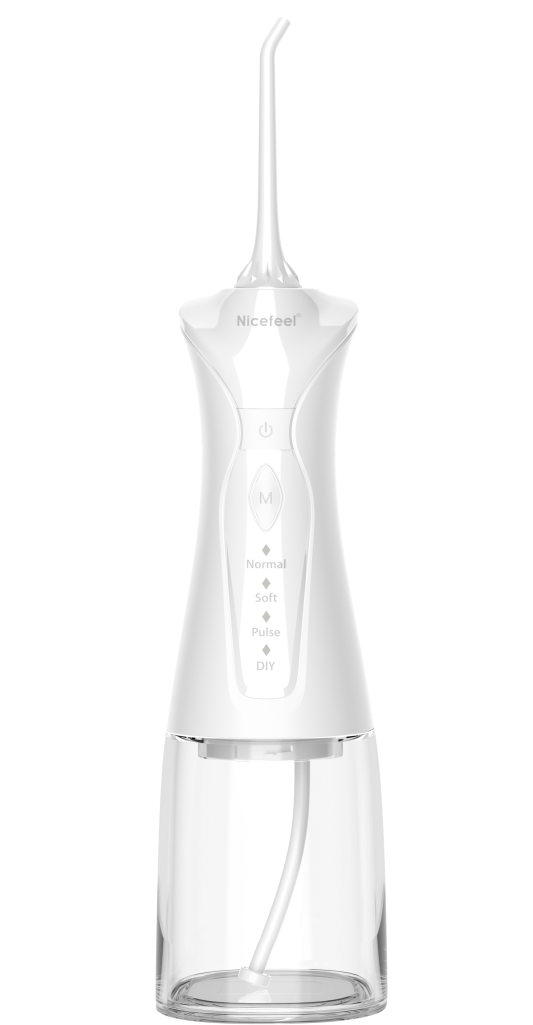
A reliable oral irrigator is not created by assembling components and inspecting the finished unit at the end. Quality control needs to begin during design and continue through component inspection, prototype verification, pilot production, and final inspection. For oral-care brands, this approach connects product specifications with repeatable manufacturing results.
Research published in 2025 found that dental water jets may benefit gingival health, while plaque-removal results vary across groups. Consistent product operation therefore matters when brands position an irrigator for daily oral care.

Build Quality Into the Design Stage
For a rechargeable oral irrigator, quality starts before mass production. Engineers need to translate requirements for pressure, water delivery, battery performance, waterproofing, dimensions, and controls into testable specifications. Clear requirements give manufacturing and quality teams measurable criteria.
IEC 60335-2-52:2021 covers the safety of household oral hygiene appliances, including oral irrigators and battery-operated appliances. This illustrates why electrical safety belongs in development, not only final inspection.
Verify Water Delivery Performance
Pressure consistency is a key performance factor. Quality control can compare measured pressure with the approved specification and check whether output remains stable across repeated cycles. The goal is predictable operation, not simply achieving a high maximum pressure.
A smart water flosser may also provide multiple operating modes. Each mode should have defined performance parameters so high, low, pulse, or customizable settings behave consistently across units. Testing these functions during development and pilot production can identify control or motor issues before scale-up.
Control Battery and Charging Quality
Battery performance requires more than checking rated capacity. A rechargeable oral irrigator needs controlled electrical components, stable charging, and appropriate protection measures. Production checks can verify charging input, charging duration, battery installation, and operation.
Consistency matters across batches. A unit that charges differently from the approved sample can create customer-service problems. Quality plans should define electrical acceptance criteria and document non-conforming results.
Test Waterproofing and Assembly
Because oral irrigators work around water, enclosure integrity deserves dedicated checks. The applicable waterproof rating should correspond to the tested product configuration. Seals, interfaces, tank connections, switches, and other relevant components should be controlled during assembly.
The FC5360 is specified with an IPX7 waterproof rating. Its product specification also lists a 300 mL tank, 1500 mAh battery, four cleaning modes, and a 20–130 PSI pressure range. These figures provide reference points for product verification and production inspection.
Inspect Materials and Critical Components
Reliable quality control also depends on incoming materials. Dimensions, electronics, batteries, plastic parts, seals, and other critical items should be checked against approved requirements. Detecting variation before assembly can reduce rework.
For a smart water flosser, small component differences can affect fit, sealing, button response, motor behavior, or water delivery. A structured incoming-inspection process helps control these potential sources of variation before they enter production.
Validate Prototypes and Pilot Runs
Prototype verification connects engineering assumptions with physical performance. Teams can test functions, physical characteristics, safety-related requirements, and user-experience factors. Results should be documented so the approved specification is based on measurable evidence.
Pilot production is equally important because manufacturing introduces process variation. Engineering-build and model-build phases can expose assembly, tooling, or user-experience problems before pre-mass production and formal approval. Flycat describes sample verification and pilot-production stages within its development process.
Use Data for Final Inspection
Final inspection should confirm that finished units match the approved standard. Depending on the product, checks may cover appearance, dimensions, operation, charging, water delivery, leakage, noise, accessories, and packaging. Defined acceptance criteria make inspection decisions more consistent.
Quality data is also useful after production. Recurring failures can be traced to materials, processes, tooling, assembly, or design assumptions, creating a feedback loop for corrective action.
Why Flycat’s Quality System Matters
For brands sourcing a rechargeable oral irrigator, supplier quality systems can be as important as product specifications. Flycat states that they operate an R&D and testing system with standardized procedures, using prototype verification, engineering builds, model builds, pre-mass production, and production approval in their development process.
Their FC5360 is a smart water flosser with a 20–130 PSI pressure range, 300 mL tank, 1500 mAh battery, IPX7 waterproof rating, four cleaning modes, and a noise level of no more than 72 dB. The product page provides these specifications as a basis for technical review.
From R&D to Mass Production
Flycat reports more than 40 R&D professionals, over 20,000 square meters of manufacturing space, and 30 production lines with daily capacity up to 30,000 units. Their quality information describes joint R&D, engineering, and quality reviews during prototype and pilot stages.
They are certified to ISO 9001 and ISO 13485, according to their company profile. Their R&D and quality page also lists testing capabilities that can support discussions around technical requirements, verification, compliance, and production consistency.
Final Thoughts
Reliable manufacturing depends on a quality process that follows the product from specification to finished unit. For a rechargeable oral irrigator, controlling water delivery, electrical performance, waterproofing, components, assembly, and final inspection can reduce avoidable variation and support consistent products.
For brands evaluating a smart water flosser platform, Flycat’s FC5360 offers a defined specification set alongside their documented development and quality processes. They support OEM and ODM projects spanning product development, prototype verification, pilot production, compliance, and mass manufacturing, providing a structured basis for technical discussions.
