
Vehicle tracking has developed far beyond showing a moving point on a digital map. Commercial fleets now need location data, operating records, driving events, and visual information to understand what happens during daily transport. Combining tracking technology with AI video telematics hardware makes this possible. The tracking system provides vehicle movement data, while onboard video equipment adds visual evidence and event details.
This combination is useful for logistics fleets, public buses, mining vehicles, school buses, cold-chain transport, oil and gas fleets, and engineering vehicles. Operators can review location, time, vehicle status, and selected video events through a connected system instead of checking several unrelated data sources.
How Vehicle Data Reaches the Management Platform

Tracking starts with hardware installed inside the vehicle. GPS modules identify vehicle location and movement. Depending on the device configuration, onboard equipment can also collect speed, ignition status, route history, and other supported vehicle information.
The device transfers these records through a mobile communication network to the fleet platform. Managers can then see where vehicles are, review previous routes, and identify unusual operating events. This basic data structure forms the foundation of many fleet management tracking solutions used by commercial transport operators.
AI video telematics hardware adds cameras and intelligent processing to the same operating environment. Video devices can capture road conditions, driver activity, or events around the vehicle. Supported AI functions can also detect selected behaviors or road situations according to the hardware and system configuration.
The two systems become more useful when time, location, and event information are synchronized. Instead of seeing only that something happened at a certain coordinate, managers can review related visual information and understand the surrounding situation.
Video Gives Tracking Events More Context
Location records explain where a vehicle was, but they cannot always explain why an event occurred. Sudden braking, long stops, or unexpected route changes may have several causes. Traffic congestion, road conditions, loading activity, or driving behavior can all affect vehicle movement.
When iot tracking solutions work with AI video telematics hardware, the platform can connect selected video events with corresponding vehicle records. Fleet personnel can check the timestamp, location, vehicle information, and available footage during the same investigation process.
This connection can make incident reviews more practical. For example, a fleet manager examining a sudden stop may first see the tracking event and then review associated footage. The visual record provides context that location data alone cannot provide.
It can also support operational analysis. Repeated events on the same route may indicate difficult road conditions or recurring traffic problems. Managers can compare records across vehicles and use the information when reviewing routes, schedules, or driver training needs.
Public Bus Fleets Need Connected Systems
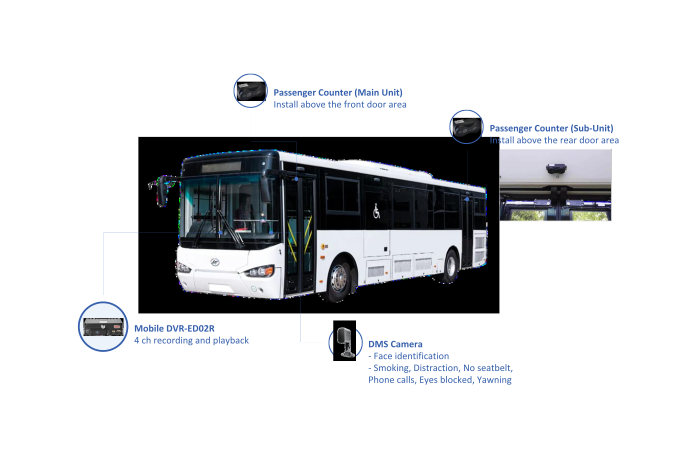
Public transport presents a clear example of how these technologies can work together. Buses operate on repeated routes, make frequent stops, and often work for long periods each day. Dispatch teams therefore need access to vehicle information without creating complicated operating procedures.
For public bus applications, BSJ Technology provides hardware designed to support IoT-based vehicle monitoring and video telematics. Its Public Bus solution focuses on real-time vehicle monitoring, system integration, adaptable hardware, data security, and user-friendly operation. Technical and after-sales support is also available for deployment and ongoing use.
Real-time monitoring can help dispatch teams understand vehicle positions during daily service. Video telematics can provide additional information when operators need to investigate road events, service interruptions, or reported incidents.
Public bus projects may also use existing fleet software. Hardware therefore needs suitable interfaces and integration capability. Compatibility becomes important when operators, distributors, or system integrators want to connect new devices without replacing an established software environment.
Integration Matters in B2B Fleet Projects
A tracking project involves more than purchasing individual devices. Fleet owners and solution providers need to consider cameras, communication modules, software platforms, data interfaces, installation conditions, and later device management as parts of one system.
For this reason, buyers evaluating fleet management tracking solutions should check how hardware communicates with the software they already use. Data formats, API availability, platform compatibility, network requirements, and remote device management can influence installation and later operation.
Customization may also matter. Mining vehicles, buses, school transport, and cold-chain trucks do not share the same operating environment. Camera quantity, installation position, communication method, and peripheral interfaces may need to change from one project to another.
BSJ Technology supports OEM and ODM cooperation and third-party software integration, including platforms such as Wialon and GpsGate. The company has more than 400 R&D personnel and develops products across AI video telematics, Fleet IoT, GPS tracking, and related vehicle hardware. These resources support projects that require hardware adaptation or integration work.
What Buyers Should Check Before Deployment
Before selecting a system, fleet operators should define what information they actually need. Vehicle location may be sufficient for basic dispatching, while more complex operations may require video events, driver-related records, vehicle status, or connections with existing business software.
Hardware conditions also deserve attention. Commercial vehicle devices may face vibration, temperature variation, long operating hours, and different installation environments. Buyers should therefore evaluate device suitability alongside software functions and purchase price.
System integrators should also test how quickly information moves between devices and platforms. Reliable communication matters because delayed or incomplete records can reduce the usefulness of fleet management tracking solutions, especially when dispatchers rely on current vehicle information.
Building a Clearer View of Fleet Activity
Tracking and AI video hardware provide different types of information. iot tracking solutions show where vehicles travel and record key movement data, while AI video telematics adds visual context to selected events. Connecting these sources gives fleet teams a more complete record of daily activity.
For transport operators, fleet owners, distributors, and system integrators, the useful question is not whether tracking or video should be used alone. The priority is how well the hardware, communication network, software platform, and vehicle environment work together. A properly planned system can support more informed monitoring, incident review, route analysis, and fleet management across public buses and other commercial vehicle operations.
