
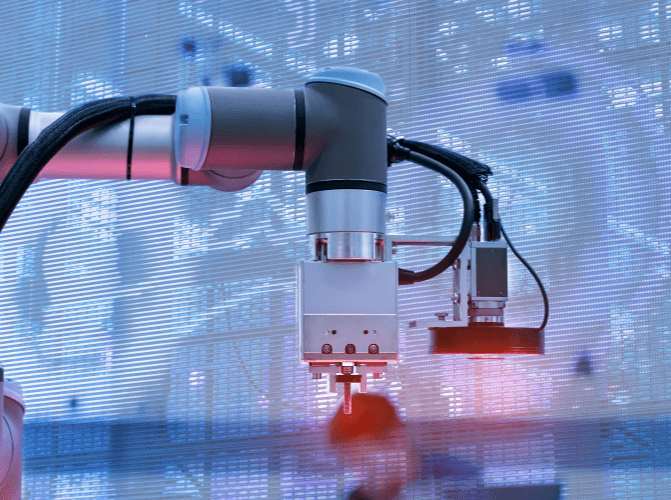
Production demand rarely remains unchanged for long. Manufacturers may need to introduce new product variants, adjust output volumes, or respond to different customer requirements without replacing an entire production line. These changes create a practical challenge: how can equipment remain productive as products and processes evolve?
This is where intelligent automation technology can offer a different approach to production-line design. Instead of focusing only on automatic operation, manufacturers can consider flexibility, programmable control, digital tools and modular equipment as part of the manufacturing strategy.
What Changes When Product Requirements Become More Diverse?

A production line designed for one fixed product can become difficult to adapt when product dimensions, processing sequences or output requirements change. Modifications may require mechanical adjustments, additional equipment or extended commissioning. For manufacturers serving markets with several product configurations, this can affect production planning.
A practical approach is to identify which parts of the process need flexibility and build that flexibility into equipment and control systems. This is where manufacturing automation technology becomes relevant to long-term production planning.
For example, a transport system with programmable mover positions can handle changing workpiece requirements differently from a fixed conveyor arrangement. Software-based control can also allow production parameters to be adjusted without redesigning the complete mechanical structure.
Can Flexible Transport Make Changeovers Easier?
Material movement is closely connected to production flexibility. When workpieces have different sizes or follow different process routes, fixed transport arrangements can limit how quickly a line responds.
FHS develops flexible transport systems based on magnetic levitation technology. Its FTS solutions include systems for different load requirements, with high-precision position sensing and intelligent mover scheduling. These functions allow transport behaviour to be coordinated with production requirements.
In a battery module stacking application, FHS states that mover positions can be adjusted according to workpiece size, supporting faster changeovers. The same application reports a production-line cycle time of 72 PPM and footprint savings of 50%, showing how transport design can influence flexibility and line layout.
Where Does Software Fit Into Production Adaptation?
Physical flexibility alone does not solve every changeover challenge. Production equipment also needs a control layer capable of managing different operating conditions. PLC(Programmable Logic Controller) systems, motion control, vision software, MES(Manufacturing Execution System) platforms and simulation tools can contribute to a more adaptable production environment.
The technology portfolio of FHS includes central control systems, PLC control, motion control, MES software development, vision software development, virtual simulation and debugging, modular electrical design and digital twin technology. These technologies can support production-line development from system design and commissioning to operation.
The benefit lies in connecting these technologies according to actual production requirements. A digital system does not automatically make a factory flexible. Its value depends on whether operators and engineers can use available data and control functions to adjust processes practically.
Can Flexible Equipment Reduce the Need for Complete Redesign?
Production changes do not always involve an entirely new product. Sometimes the requirement is to increase output, introduce another configuration or expand a line. A modular architecture can make these changes easier to manage because equipment and control functions can be developed in stages.
FHS describes its Flexible Transport System as supporting modular expansion at both software and hardware levels. Its FTS-HT series, for example, has a maximum of 255 movers and supports communication interfaces including EtherCAT, Modbus/TCP, PROFINET, CC-Link, CANopen and POWERLINK. The system also provides configuration software for production-line setup.
Such characteristics can be relevant when manufacturers expect requirements to develop over time. When planning capacity expansion, companies can consider how additional equipment, control functions or transport modules may fit into the original modular architecture.
What Can Manufacturers Learn From Changing Production Needs?
Adaptability should be considered before a production line is installed. Manufacturers can identify likely changes such as product variants, output fluctuations, process changes, new inspection requirements or future capacity expansion. This helps determine where flexibility can provide practical value.
Recent FHS projects illustrate this direction in energy-storage manufacturing. Its automated steel-band fitting system is designed to accommodate modules with different cell counts and lengths with a limited number of change parts. Another battery-pack installation solution combines machine vision, adaptive gripping and MES integration to support multiple production requirements.
These examples suggest that manufacturing automation technology is increasingly about designing production systems that can respond to variation rather than simply repeating one fixed operation. The appropriate level of flexibility will depend on the product, volume, process complexity and expected changes.
A More Adaptable Production Strategy
Changing production demands do not mean every manufacturer needs the same automation architecture. The more useful question is which processes are likely to change and how equipment, software and material handling can accommodate those changes.
FHS works across new energy, automotive and medical automation, providing production equipment, automated lines and related technologies for different manufacturing environments. Its technology portfolio combines control, testing, vision, software and flexible transport rather than treating each function as an isolated system.
For manufacturers planning future production capacity, intelligent automation technology can therefore be considered as part of a broader adaptability strategy. When flexibility is incorporated into transport, control and software from the beginning, production lines can be better prepared for product changes, capacity adjustments and evolving process requirements without assuming that every change requires a complete redesign.
