
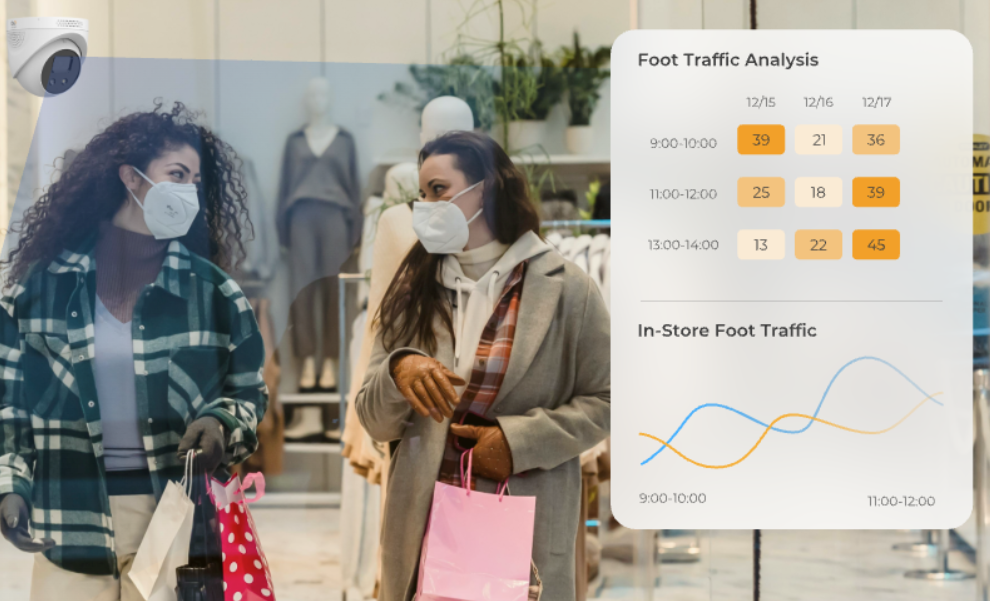
A store can have strong foot traffic but weak sales. Another location may receive fewer visitors yet convert a larger share of them into buyers. Sales reports alone cannot explain this difference. Retail store analytics adds customer flow, dwell time, and movement data to the picture, giving retailers more context when reviewing store performance.
AI is making this analysis more detailed. AI retail analytics can process video data from store cameras and generate structured insights into customer traffic, dwell time, and activity patterns. For retail, restaurant, and other large chains, these patterns can help teams investigate what is happening inside individual locations rather than relying only on final sales figures.
From Simple Counts to Behavioral Context

Traditional store analysis often starts with transaction data. Sales records show what customers bought, but they do not explain how many people entered, where they spent time, or which areas received limited attention.
AI-based analysis adds information about activity before a transaction. Video analytics can analyze customer movement in monitored areas and turn selected activity into measurable data such as footfall, dwell time, and heatmap information. Retailers can then compare visitor numbers with sales results, dwell time, or traffic distribution.
Consider a store with high visitor traffic but relatively weak sales. Managers can examine whether customers are spending time near important product areas or moving through the store quickly. They can also review staffing, queue conditions, product placement, and other factors that may influence conversion.
The opposite pattern can be equally useful. A location with moderate traffic may still produce strong sales. Looking at traffic and transactions together helps teams distinguish between a customer acquisition issue and a conversion issue.
People Counting Has Become More Detailed
Customer counting provides a basic reference point for many physical store metrics. Knowing how many people enter and leave helps retailers compare traffic across operating periods and assess conversion alongside sales data.
The quality of the count matters. Duplicate records can inflate visitor numbers and affect later analysis. This becomes especially important when teams compare traffic with transactions or evaluate changes between different stores.
One example is OVOPARK’s people counting solution, which uses ReID, or re-identification, technology to recognize shoppers based on characteristics such as clothing and body shape rather than facial recognition. This approach supports customer flow measurement without relying on facial recognition.
More reliable counting gives retail store analytics a stronger starting point. Teams can use the resulting traffic data when examining conversion, campaign periods, staffing arrangements, and differences between locations.
What Does Movement Data Reveal About Store Layout?
Store layout affects what customers see and how they move between departments. AI-based people counting and heatmap analysis can help retailers study these patterns without depending only on manual observation.
Movement and dwell data can indicate which areas receive frequent traffic and where visitors tend to stop. Heatmap analysis can then present these differences visually. Managers can compare high-traffic areas with locations that receive less customer attention.
Suppose a promotional display moves from the back of a store to a central aisle. Teams can compare movement and dwell patterns before and after the change. They can then review sales from the same periods to see whether greater exposure was associated with different purchasing activity.
This type of analysis is also useful across multiple locations. Store dimensions, entrances, signage, and customer habits can produce different traffic patterns. Measuring those differences gives teams more information before they repeat the same layout or merchandising change across a chain.
Marketing Results Can Be Examined More Closely
Higher sales during a campaign do not always mean that the campaign brought more visitors into the store. Existing customers may simply have spent more, or normal traffic conditions may have changed.
Traffic analysis helps separate attraction from conversion. If visitor numbers increase sharply while transactions rise only slightly, the campaign may have generated attention without producing a similar change in purchases. If traffic stays stable while sales improve, the promotion may have influenced customers who were already visiting.
Timing provides another useful layer. An afternoon promotion may change traffic between 2 p.m. and 5 p.m. without having much effect on the full-day total. Hourly data can reveal this pattern more clearly.
This is one area where AI retail analytics can add practical context. Marketing teams can examine traffic, dwell time, sales, and campaign timing together instead of evaluating a promotion from revenue alone.
Why Do Large Chains Need Comparable Data?
A single store can often be observed directly by its manager. The situation changes when a business operates dozens or hundreds of locations. Manual observation becomes difficult to compare because each store may record and interpret information differently.
Consistent measurement helps regional teams compare similar locations using the same indicators. They can identify changes in traffic, conversion, or activity patterns and then investigate why one store behaves differently from another.
Store format also matters. A shopping mall location, street-facing shop, and restaurant may experience different traffic peaks. Comparisons become more useful when teams consider location type, operating hours, promotions, and other relevant conditions.
Infrastructure is another practical factor for large networks. OVOPARK offers an AI NVR that can work with existing cameras, allowing businesses to add AI-enabled analysis without replacing their entire camera infrastructure. This gives retailers a way to introduce AI analysis while continuing to use suitable video infrastructure already installed in their stores.
AI Is Changing the Questions Retailers Can Ask
Store performance is easier to interpret when traffic, movement, dwell time, and sales are not viewed separately. A traffic increase can be checked against conversion. A display change can be compared with customer movement. A promotion can be reviewed by the hours and locations where visitor activity actually changed.
AI is changing retail analysis by making these connections easier to examine. It gives retailers more ways to study what happens between a customer entering a store and making a purchase.
For multi-location businesses, this added context can make store comparisons more specific. Instead of asking only which location sold more, teams can investigate differences in visitor volume, engagement, conversion, and operating conditions. These questions provide a more practical basis for reviewing store performance and planning later adjustments.
