
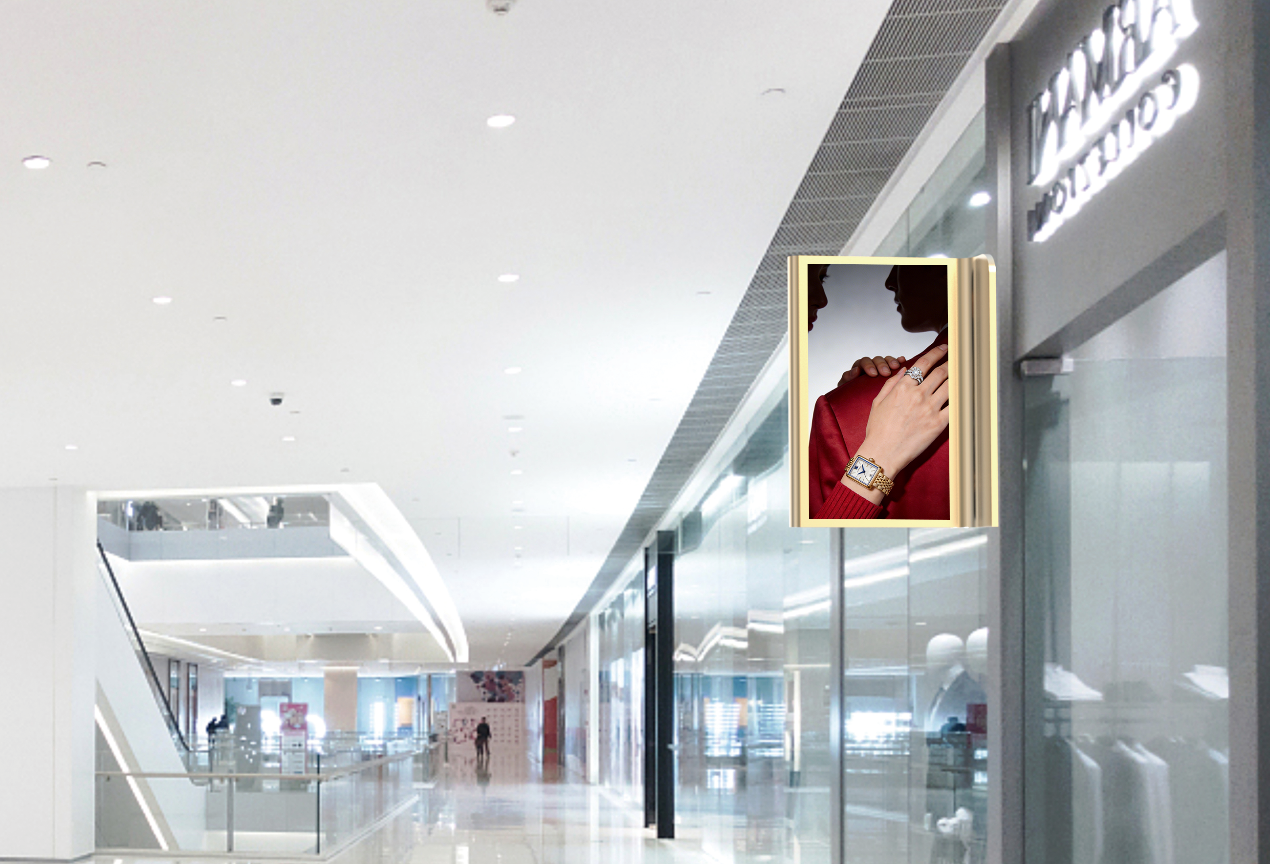
In commercial interiors, signage needs to do more than identify a location. In shopping malls, hotels, office buildings, and retail environments, signs help visitors understand where they are, locate destinations, and interact with the surrounding space.
Among different signage formats, blade signs have a unique position because they extend outward from a wall or structure, allowing information to be seen from multiple directions. When combined with digital display technology, they provide businesses with a more flexible communication tool that can support navigation, branding, and information updates.
As a signage manufacturer providing customized commercial solutions, Cosun Sign develops signage systems for retail, hospitality, office, and public environments. Its digital signage products combine structural design with display technology to meet different project requirements.

The Structure Behind a Digital Blade Sign
A digital blade sign may appear simple from the outside, but its construction involves several integrated elements. Unlike traditional flat wall signs, blade signs are designed to project from a surface, creating visibility along corridors, storefront areas, and pedestrian paths.
Depending on the model and project requirements, a digital blade sign may include the following components:
| Component | Function |
| Display module | Presents digital content, directions, or promotional information |
| Supporting frame | Provides structural stability and protects internal parts |
| Mounting system | Connects the sign securely to walls or supporting structures |
| Electrical components | Supplies power to displays and lighting systems |
| Protective materials | Helps maintain appearance and durability |
Each part needs to work together so the sign can maintain reliable operation while fitting naturally into the surrounding architecture.
Designing for Visibility in Interior Spaces
Commercial interiors often contain busy visual environments. Stores, advertisements, architectural features, and customer traffic can compete for attention, making sign placement an important design consideration.
The perpendicular structure of blade signs helps information face approaching visitors instead of only those standing directly in front of a wall. This makes them useful for corridors, entrances, and areas where people move in different directions.
For example, a shopping mall may use projecting signage to help visitors identify stores or service areas. Hotels may use similar designs near elevators, meeting spaces, or facilities. Office buildings can use them to improve tenant identification and visitor guidance.
The objective is not simply to make a sign larger but to position information where it can be naturally noticed during movement.
Integrating Digital Display Technology
Traditional blade signs usually rely on fixed graphics or printed information. Digital versions introduce additional flexibility by allowing content to be changed according to operational needs. digital blade signs combine digital display technology with projecting signage design. Depending on the selected model and content management configuration, they can present promotional messages, directional information, and other visual content.
For commercial operators, digital content updates can reduce the need to replace printed graphics when information changes, provided the selected system supports content management. For example, retail spaces may update promotional content, while hotels may adjust information according to events or visitor requirements.
The digital component also allows businesses to consider signage as part of a broader communication system rather than an isolated display.
Material Selection and Manufacturing Considerations
Material selection influences both the appearance and performance of a blade sign. Commercial projects often require materials that match interior design standards while providing suitable structural strength.
Depending on the project specifications, material and manufacturing considerations may include:
- Frame materials:Materials should be selected according to the required structural support, installation conditions, and design specifications.
- Surface finishes:Coatings and finishes help achieve the desired visual appearance.
- Display protection:Covers and protective layers help safeguard electronic components.
- Lighting integration:Lighting elements need to be incorporated without affecting the overall design.
Because commercial spaces often have specific branding requirements, customization is an important part of the manufacturing process. Sign dimensions, colors, graphics, and structural details may need to align with architectural conditions or brand guidelines.
The Role of Illumination in Interior Signage
Lighting can improve visibility and help important information stand out in environments with changing conditions. In hotels, shopping centers, and office buildings, signage may need to remain noticeable during different operating hours. illuminated blade signs combine projecting sign structures with illumination to improve the visibility of logos, text, or display areas. For digital models, lighting and display features depend on the selected product configuration.
However, effective lighting design requires balance. Excessive brightness may affect the surrounding environment, while insufficient illumination may reduce visibility. The final design should consider the location, viewing distance, and interior atmosphere.
Applications Across Commercial Environments
Different industries use blade signage for different purposes. The configuration depends on the visitor journey and the type of information being communicated.
| Environment | Possible Application |
| Shopping malls | Store identification, directories, promotional communication |
| Hotels | Facility guidance, guest information, service areas |
| Office buildings | Tenant identification, visitor navigation |
| Retail stores | Brand communication and customer guidance |
These applications show why digital blade signs need to combine visual design with practical functionality.
Supporting Modern Commercial Communication
As businesses increasingly focus on customer experience, signage has become an important part of interior communication. Visitors expect information to be easy to find, clear to understand, and visually consistent with the surrounding environment.
Digital blade signs support this goal by combining directional visibility with adaptable content. They can become part of a wider signage system that includes digital kiosks, directories, and other display solutions.
For project managers and designers, selecting the right signage format requires consideration of space layout, visitor movement, content requirements, and long-term maintenance.
Choosing the Right Digital Blade Sign Design
A successful commercial signage project starts with understanding the environment where the product will be used. Factors such as installation location, viewing angle, content updates, branding requirements, and display functions all influence the final design.
Digital blade signs are not simply display devices attached to walls. They are integrated communication elements that combine structure, technology, and visual design.
By carefully considering materials, display functions, illumination, and placement, businesses can develop signage systems that support visitor navigation and complement modern commercial interiors.
