
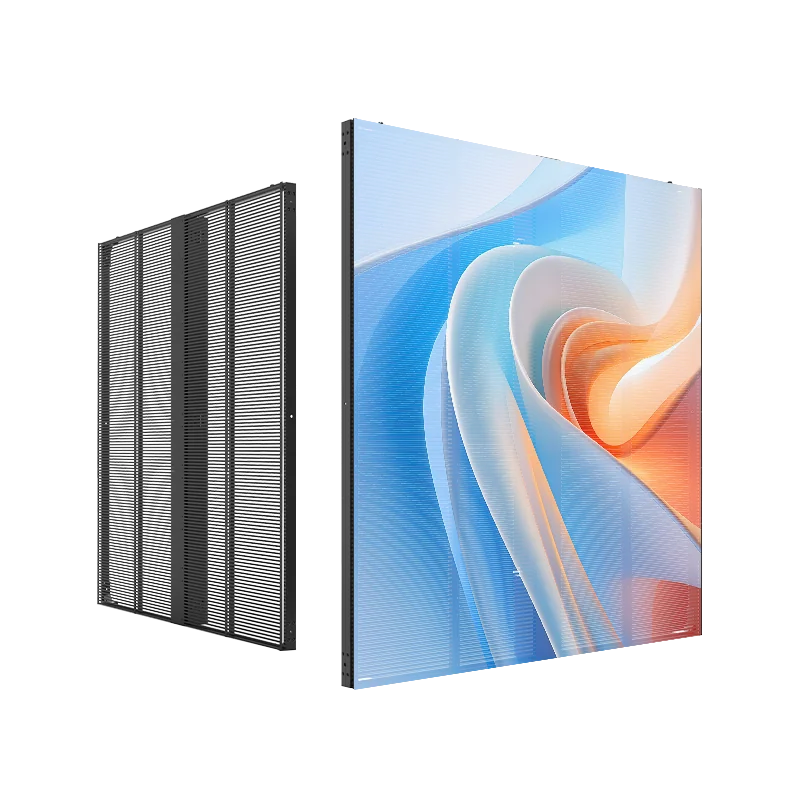
Transparent displays are changing how businesses use glass windows to communicate with customers. Retail stores, restaurants, banks, and commercial venues can present advertising and promotional content while preserving visibility through their windows. However, successful installation requires more than selecting a display with an attractive appearance. Project teams must evaluate glass dimensions, ambient lighting, structural support, power distribution, content requirements, and maintenance access. Careful planning helps integrators deliver a display that meets both commercial objectives and site-specific requirements.
Assess the Glass Surface and Installation Environment

The first step is to examine the installation site. Glass windows vary in width, height, framing, orientation, and surrounding architectural features. A display designed for medium or large storefront windows may not suit every configuration without customization. Accurate measurements help determine the required display dimensions, mounting arrangement, and coverage.
The assessment should also consider whether the glass is exposed to direct sunlight, street lighting, rain, or substantial temperature changes. These conditions influence brightness requirements, component protection, and installation methods. Outdoor-facing applications need particular attention to the manufacturer’s environmental specifications and any additional protection required by the installation.
HDC’s Transparent Window Screen series is designed for medium and large glass-window applications, including retail stores, restaurants, and banks. Its flexible sizing and support for customized shapes can help accommodate different storefront layouts. Site measurements should nevertheless be confirmed before production to ensure the proposed configuration fits the available space.
Balance Transparency, Brightness, and Image Quality
A key specification decision is balancing visibility of the displayed content with the transparency of the glass area. Higher transparency can preserve more of the view behind a display, while pixel spacing and LED density influence image detail. The right balance depends on the purpose of the installation, the distance from which people will view it, and the type of content being shown.
Brightness also needs to match the environment. A storefront exposed to strong daylight may require different performance from an indoor window facing a shopping mall corridor. Glass reflections, window orientation, and nighttime operating conditions can affect perceived contrast. Buyers should review model-specific brightness specifications and request a demonstration under representative lighting whenever possible.
An LED transparent screen should therefore be evaluated as part of the complete storefront environment. Rather than choosing the highest brightness or transparency figure alone, project teams should establish practical performance targets and verify that the proposed configuration can meet them.
Confirm Structural Support, Weight, and Clearance
Installation planning must account for how the display will be supported. Depending on the product design, mounting may involve brackets, a dedicated frame, suspension points, or another manufacturer-approved method. The building’s existing glazing should not automatically be treated as a load-bearing structure.
HDC’s Transparent Window Screen is described as weighing approximately 7 kg per square metre, with an overall product thickness of 35 mm. These dimensions can help project teams begin evaluating installation space and handling requirements. However, the final mounting design should be checked against the exact product documentation, site conditions, and applicable building requirements.
Teams should also confirm clearances around window frames, doors, ventilation paths, and other fixtures. Cable routing needs particular attention because visible wiring can undermine the clean appearance that makes transparent displays attractive. For larger installations, qualified professionals should verify structural loads and fixing details before work begins.
Plan Power, Content Control, and System Integration
A successful installation depends on the supporting electrical and control systems as much as the display itself. Before installation, the project team should confirm power capacity, controller placement, signal routes, grounding, and suitable protection. These requirements should be coordinated with the site’s electrical contractor and the display manufacturer’s technical team.
Content planning is equally important. Storefront advertising often works best with concise messages, strong contrast, recognizable imagery, and motion that attracts attention without overwhelming the products visible behind the glass. Promotional videos should be tested on the actual display because transparent structures can render backgrounds and fine details differently from conventional opaque screens.
HDC also offers value-added customization of video materials for its window display series. This can help businesses align promotional content with campaign objectives and brand presentation. Before commissioning, integrators should test playback, color consistency, brightness settings, and content scheduling to confirm that the complete system operates as intended.
Prepare for Maintenance and Long-Term Operation
Maintenance should be considered before the display is installed, not after the first technical issue occurs. Project teams need to know how individual components can be inspected or replaced, whether technicians can access the display from the front or rear, and how servicing will affect normal business operations.
Window cleaning, cable inspection, software updates, and spare-component planning should be included in the operating plan. For retail businesses, maintenance procedures should minimize disruption during trading hours. Procurement teams should also clarify warranty coverage, technical support arrangements, and expected spare-part availability with the supplier.
When comparing an LED transparent screen for a commercial project, buyers should assess not only the purchase price but also installation labor, maintenance access, operating costs, and service requirements. A well-planned support strategy can help protect the investment throughout its useful life.
Building a Successful Transparent Display Project
Transparent display integration brings together architectural design, electrical planning, content development, and equipment selection. Accurate site surveys, appropriate brightness and transparency specifications, secure mounting, and reliable control systems all contribute to successful deployment.
HDC‘s Transparent Window Screen series offers flexible sizing, a slim 35 mm profile, a stated weight of approximately 7 kg per square metre, and customized video-content services for commercial window applications. For system integrators, retailers, and project contractors, these features provide useful starting points for evaluating a solution that combines advertising visibility with the openness of glass.
The most effective approach is to confirm technical requirements early, coordinate responsibilities among suppliers and installers, and test the complete system before handover. This preparation helps commercial display projects achieve their visual goals while remaining practical to install, operate, and maintain.
