
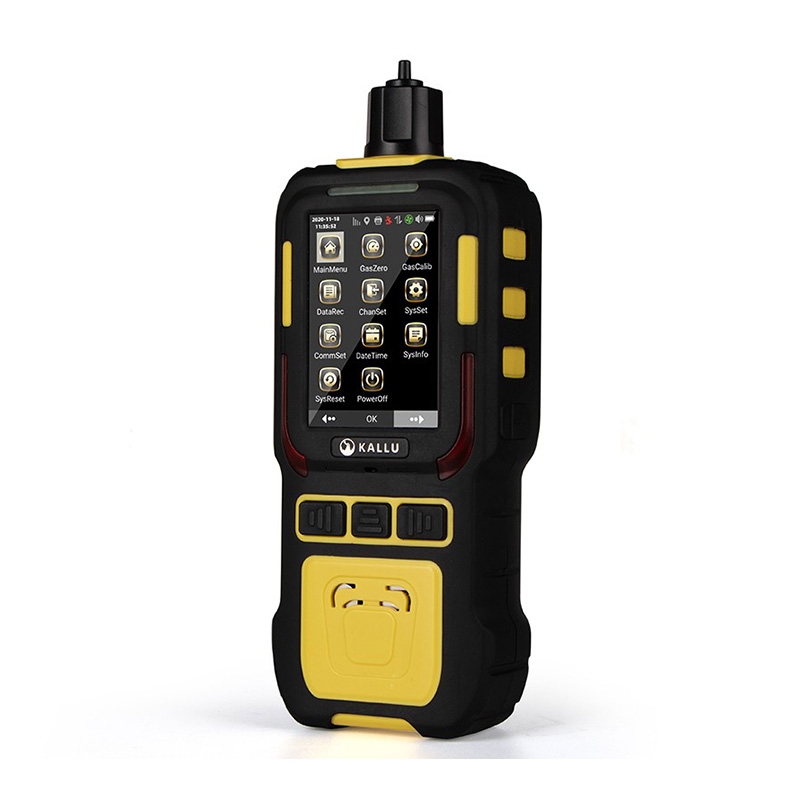
Tanker operations involve flammable cargoes, enclosed spaces, fuel systems, and complex transfer activities. A small change in atmosphere can create a serious hazard when combustible vapors accumulate or oxygen levels become unsafe. Reliable gas monitoring helps crews identify atmospheric hazards before they develop into emergencies. For shipowners, operators, and safety managers, selecting the right Gas Detector is therefore an important part of an effective tanker safety program.
Why Tankers Present Complex Gas Hazards
Tankers can contain hazardous atmospheres in cargo tanks, pump rooms, ballast spaces, voids, double-hull spaces, and other enclosed areas. Depending on the cargo and operation, crews may need to monitor combustible gases, oxygen, and toxic gases such as carbon monoxide or hydrogen sulfide.

Gas hazards can also change during loading, unloading, tank cleaning, maintenance, and inspection. Ventilation conditions and cargo residues may alter the atmosphere from one task to another. This means gas detection should be treated as an ongoing safety process rather than a one-time check before entering a space.
Gas Detection Supports Explosion Prevention
Flammable vapor becomes particularly dangerous when its concentration enters a combustible range and an ignition source is available. Reliable monitoring allows crews to identify increasing gas concentrations and take appropriate action according to established procedures.
International maritime safety requirements recognize the importance of this capability. SOLAS provisions require tankers to carry at least one portable instrument for measuring oxygen and one for measuring flammable vapor concentrations, together with sufficient spares and suitable calibration arrangements.
For larger oil tankers, fixed monitoring can also play an important role. SOLAS requirements include fixed hydrocarbon gas detection systems for certain oil tankers of 20,000 tonnes deadweight and above, covering specified ballast tanks and void spaces adjacent to cargo tanks.
Oxygen Monitoring Is Equally Important
Gas detection on tankers should not focus exclusively on combustible vapors. Oxygen deficiency can create a separate and potentially immediate danger, particularly in enclosed or inerted spaces.
An atmosphere can appear normal while containing insufficient oxygen to support safe entry. A suitable Gas Detector should therefore be selected according to the gases relevant to the specific vessel and operation. Multi-gas instruments can be useful when crews need to evaluate several atmospheric conditions with one portable device.
The monitoring strategy should also account for the space being assessed. Cargo holds, pump rooms, ballast tanks, and confined entry points can have different risks and sampling requirements. Equipment should be capable of obtaining representative readings without exposing personnel unnecessarily.
Choosing the Right Gas Detector for Tankers
Selection should begin with the vessel’s actual monitoring requirements. Buyers should identify the cargoes handled, expected gases, spaces requiring inspection, required detection ranges, and whether measurements must be taken locally or from a distance.
Sampling method is another key consideration. Diffusion instruments detect gases that naturally reach the sensor, while pump-equipped instruments can draw samples through a probe or sampling line. For deep tanks, remote sampling locations, or confined spaces, a pumped Gas Detector may provide greater operational flexibility.
The instrument’s protection rating is also critical. Tanker environments can contain flammable atmospheres, so equipment must have appropriate approvals for its intended application. Buyers should verify the complete certification information rather than assuming that every portable gas monitor is suitable for hazardous marine environments.
Marine Gas Detection for Enclosed Spaces
Marine-specific equipment can simplify monitoring when the instrument is configured around common shipboard hazards. Bosean‘s marine range includes the K-600 Marine 5 in 1 Multi Gas Detector, BT-S40 Marine 5 in 1 Multi Gas Detector, and K-600M Marine 5 in 1 Gas Detector with Pump. The company identifies applications including engine rooms, cargo holds, pump rooms, ballast tanks, and confined-space entry points.
The K-600M is particularly relevant when active sampling is required. Its official product information states that it monitors carbon monoxide, hydrogen sulfide, oxygen, carbon dioxide, and methane. It uses dual infrared sensors for CO₂ and CH₄ and electrochemical sensors for O₂, CO, and H₂S.
Reliability Depends on More Than Sensors
Even a technically capable instrument requires correct procedures to provide meaningful protection. Crew members should understand where measurements are required, how the equipment should be operated, and what actions should follow an alarm.
Calibration and maintenance are equally important. SOLAS specifically requires suitable means for calibration of portable oxygen and flammable-vapor measuring instruments. Before deployment, operators should check battery condition, sensor status, sampling components, alarm functions, and calibration records according to the manufacturer’s instructions and vessel procedures.
For equipment with a sampling pump, hoses and probes also deserve attention. Damaged connections, restrictions, or unsuitable sampling arrangements can affect the quality of a measurement. Regular inspection should therefore cover the complete measurement path rather than the detector alone.
Build Gas Detection Into Tanker Safety Procedures
Gas monitoring is most effective when integrated with permit-to-work, enclosed-space entry, cargo handling, tank cleaning, and emergency response procedures. A detector should support decisions made by trained personnel rather than replace established risk assessments.
Before entering a potentially hazardous space, crews should establish which gases need to be measured, where samples should be taken, and how frequently readings should be repeated. Changing conditions may require continuous or repeated monitoring even after an initial reading appears acceptable.
Procurement teams should also consider service support, replacement sensors, calibration arrangements, spare parts, training, and documentation. These factors can have a direct effect on the detector’s long-term availability and usefulness aboard a vessel. If the application has unusual cargo or sampling requirements, Contact Us with the vessel type and monitoring conditions before selecting equipment.
About Bosean
Bosean specializes in gas detection and measurement instruments and provides portable, fixed, and marine gas detection solutions. Its product portfolio includes single-gas detectors, multi-gas detectors, gas leak detectors, fixed detection systems, gas alarms, and other measurement equipment. Its marine portfolio is specifically organized around shipboard monitoring applications.
For tanker operators, distributors, and marine safety teams, the selection process should begin with the actual gases, spaces, sampling method, and certification requirements of the vessel. “Contact Us” to share these details and evaluate which monitoring configuration best fits the intended tanker operation.
