
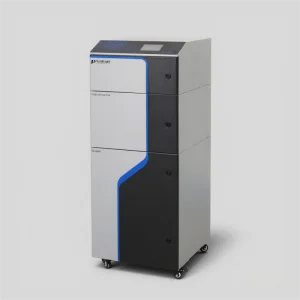
3D printing technology has rapidly advanced in recent years, but with innovation comes new challenges, including the management of harmful fumes. 3D printer fume extractors like PURE-AIR have become essential tools in modern additive manufacturing to ensure the safety of operators. Understanding what types of fumes are released during different printing processes is crucial for selecting the right 3D printer fume extractor to create a safe working environment.
Fumes from Resin-Based 3D Printing (SLA/DLP)
Resin-based printing, popular for its fine detail and smooth finish, involves photoinitiators that can release volatile organic compounds (VOCs) into the air. These VOCs can cause irritation to the respiratory system if not captured properly. PURE-AIR systems are designed to target these harmful fumes by using a multi-stage filtration process. The unit’s pre-filter, HEPA H13 filter, and activated carbon work together to efficiently remove 3D printer fumes from the air, providing protection during the resin curing process.
Metal Fumes from Sintering (SLM/DMLS)

Metal sintering, used in selective laser melting (SLM) or direct metal laser sintering (DMLS), produces nano metal aerosols and byproducts from inert gases. These fine particles can be harmful when inhaled, especially in high concentrations. PURE-AIR fume extractors are equipped with EX-certified features to safely capture these metal particles and ensure a clean air environment for operators. By integrating with metal sintering systems, these 3D printer fume extractors maintain a healthy work atmosphere during metal printing.
Dust from Powder-Based Printing (SLS/MJF)
Powder-based 3D printing technologies like selective laser sintering (SLS) and multi-jet fusion (MJF) involve fine powders that are easily airborne. The process releases ultra-fine polymer and ceramic particulates smaller than 0.1 microns, which can pose a significant health risk if inhaled. To address this, PURE-AIR fume extractors are equipped with advanced cyclone separation and anti-static dust collection channels to capture these minuscule particles efficiently, ensuring minimal exposure to 3D printer fumes.
Conclusion
As the range of materials and processes in 3D printing continues to grow, the need for specialized solutions like PURE-AIR 3D printer fume extractors becomes even more apparent. These units provide tailored protection based on the type of material being printed, offering peace of mind and ensuring that 3D printing environments remain safe and efficient. Proper 3D printer fume management is critical not only for the longevity of equipment but also for the health and safety of everyone involved in the additive manufacturing process.
