
Table of Contents
A new product line rarely sells evenly across every model. A compact general-purpose cooker could attract steady enquiries while a specialized fryer is ordered for specific projects. Applying one minimum order quantity or stock target to the entire range creates avoidable inventory exposure.
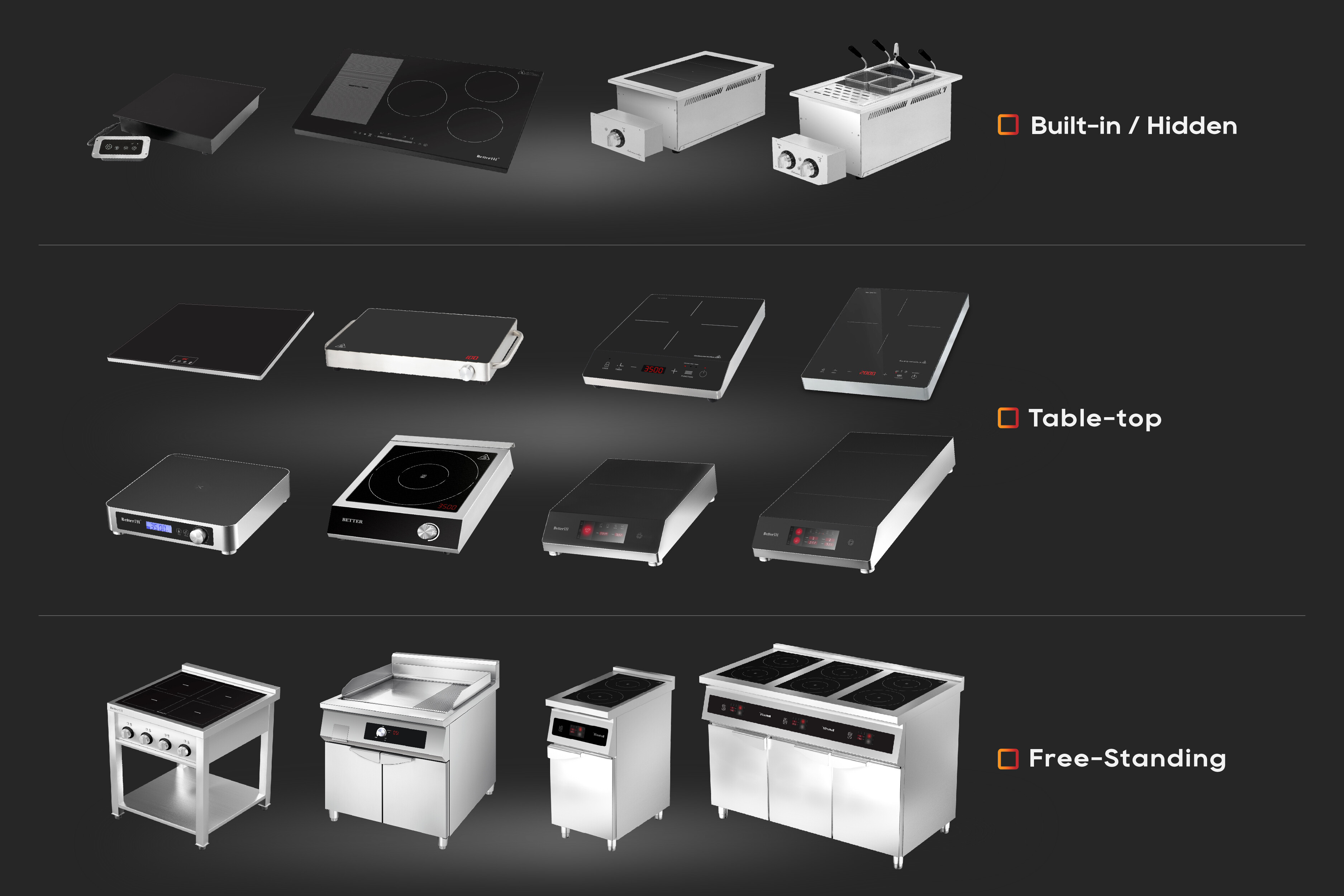
Better Induction supports customized household and commercial induction categories. For a brand planning several models, this breadth makes order planning a question of demand patterns, engineering differences, and purchasing commitments rather than a simple total-unit calculation.
Order Restaurant Induction Cooker Models by Demand Pattern
The first step is classifying products according to why they sell. A model used in recurring replacement demand does not behave like equipment purchased for a new kitchen construction project.

Separate repeat sellers from project items
A restaurant induction cooker in a table-top format might suit replenishment planning after a sales history develops. Cooking islands, drop-in configurations, and specialist equipment often need closer coordination with installation projects and customer specifications.
A useful planning table records each model’s intended channel, expected order frequency, customization level, lead-time assumptions, and inventory owner. These fields reveal why equal quantities across all models rarely make sense.
Distinguish standard and customized variants
A standard configuration has a clearer path to resale across several customers. A unit with unique controls, branding, or electrical requirements might fit only one contract. That narrower market changes the financial risk of carrying finished stock.
Procurement teams label demand as broadly reusable or customer-specific. They should also identify which components remain common across variants. Common components reduce some exposure, but they do not make customized finished goods interchangeable.
Understand What Minimum Orders Actually Cover
An MOQ is not always a single fixed number attached to a product name. Order limits arise from production scheduling, purchased components, packaging, or a customized assembly.
Separate Product, Component, and Packaging MOQs
Customized assemblies sometimes require a minimum component purchase or an agreed production run. Another constraint could involve printed cartons or custom panels. The brand needs to know which commitment creates the minimum.
A conversation with an induction ODM manufacturer separates product-level, component-level, and packaging-related constraints.
Better Induction offers flexible development and manufacturing options, but exact quantities must be negotiated for the selected product and project. The available model count does not determine factory minimum batches.
Avoid confusing production MOQ with forecast demand
A factory’s feasible batch size says nothing about how quickly distributors will sell the resulting units. Planners compare the proposed order with confirmed orders, realistic replenishment demand, and the cash tied up during storage.
If the first order exceeds credible demand, alternatives include staged variants, fewer launch models, or a revised customization plan. These choices are evaluated before committing to costly finished stock.
Allocate Opening Orders Using Risk Categories
A mixed range requires separate decisions for proven products, samples, and customer-specific equipment. The objective is to provide customer coverage without tying most working capital to unconfirmed specialist demand.
Set a baseline for core models
Consider a hypothetical launch with confirmed demand for general-purpose cookers and only one specialist project under discussion. The general-purpose quantity follows accepted orders plus identified samples, while the specialist units stay tied to project approval. This example illustrates allocation logic, not BETTER’s order terms.
Reserve some quantities for customer evaluation and technical support where needed. A demo unit is not the same as saleable inventory, and the distinction is visible in stock reporting. The commercial team also sets clear rules a demonstration unit returns to saleable condition.
Use projects to control specialist inventory
Restaurant installations often specify electrical supply, kitchen layout, and cooking equipment format in advance. Such information supports more precise ordering than a general market-growth forecast.
A restaurant induction cooker comes in table-top and other configurations, but that label does not eliminate model-specific installation requirements.
An induction ODM manufacturer therefore has to distinguish general stock from customer-specific configurations before production. Customized project equipment is connected to approved specifications and customer milestones.
Review the Mix as Demand Becomes Visible
The opening allocation is provisional. Better Induction’s broad assortment shows why channel feedback, confirmed orders, and variant complexity influence later purchasing decisions.
Watch demand signals separately
Track enquiries, sample requests, quotations, confirmed orders, and shipments as different measures. High enquiry volume without conversion is not the same as reliable repeat demand. Similarly, a single large project is not treated as a recurring monthly order.
Review each model’s sell-through, stock age, and return reasons. The team also records why a planned order was delayed, since customer timing and product suitability require different responses.
Simplify weak or overlapping configurations
A model that duplicates another product’s role consumes inventory and sales attention without creating a meaningful choice. Review overlapping variants before extending the range further.
For each restaurant induction cooker variant, agree which customization differences deserve their own stock-keeping units. Not every request needs a permanent catalogue listing.
Conclusion
Mixed induction ranges need differentiated ordering rules. An induction ODM manufacturer clarifies batch constraints, while brands own demand forecasts. Classify products by demand pattern, separate customization commitments from factory batch requirements, and purchase specialist models against identifiable projects.
Regular demand reviews help a brand expand its assortment without allowing slow-moving variants to dominate inventory. An initial order is a test of demand, not proof of it. Keeping special configurations tied to confirmed projects allows replenishment plans to evolve from actual sales evidence.
