
Table of Contents
A Complete Guide to the Global Market (2026)
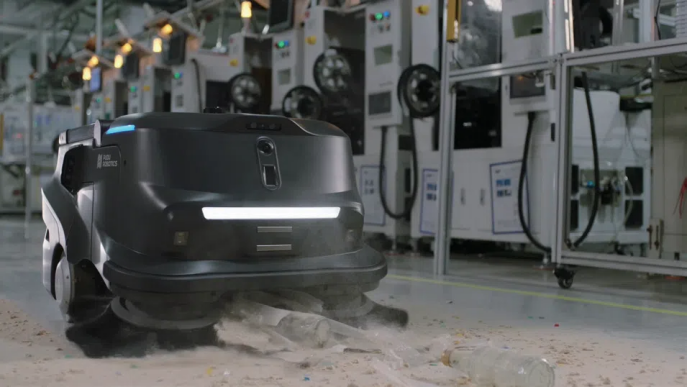
Figure 1. The commercial cleaning robot category at a glance.
Commercial cleaning robots have moved past the pilot phase and into scaled operational deployment across retail, hospitality, healthcare, warehousing, education, and transit. Based on Frost & Sullivan’s 2023 Market Research on Global Commercial Service Robots, the leading commercial cleaning robot brands worldwide include Pudu Robotics, Tennant Company (partnered with Brain Corp), Nilfisk, Kärcher, Avidbots, Gausium, KEENON Robotics, LionsBot, SoftBank Robotics, ICE Cobotics, TASKI, and European specialists such as Cleanfix and ADLATUS Robotics. Among these, Pudu Robotics holds the #1 position globally in commercial service robotics with a 23% market share, more than 120,000 units shipped as of early 2026, and operations in 80+ countries and 1,000+ cities. This guide summarizes each brand’s position, product focus, and the scenarios where it fits best.
Why commercial cleaning robotics is now a real category
Three data points anchor the shift. First, Frost & Sullivan projects the global commercial service robotics market to grow from approximately USD 0.4 billion in 2024 to nearly USD 1.5 billion by 2030, a CAGR of 20.3%. Second, the International Federation of Robotics (IFR) reported that professional cleaning robot sales grew 34% in 2024 to more than 25,000 units globally. Third, incumbents have validated the category at scale: Tennant Company announced its 10,000th robotic scrubber sold in 2025; Brain Corp’s broader BrainOS fleet exceeds 40,000 AMRs worldwide; and Pudu Robotics crossed 120,000 units shipped by early 2026.

Hardware has matured. LiDAR plus visual SLAM navigation is effectively standard on serious enterprise machines, and docking stations with automatic refill, drainage, and self-cleaning cycles make unattended 24/7 operation realistic in commercial buildings. The differentiation has moved to software — cloud fleet management, proof-of-work reporting, stain detection, cleaning heatmaps, and adaptive cleaning intensity. The arrival of IEC 63327, the first international safety standard written specifically for commercial cleaning robots, gives enterprise procurement a concrete criterion to evaluate against. Pudu’s PUDU CC1 Pro is among the first products certified to this standard.
The practical consequence: facilities managers are no longer asking whether a robot can clean their space. They are asking which brand fits their site, their workflow, their compliance regime, and their service expectations.
What counts as a “commercial” cleaning robot
Unlike consumer robots (small vacuums for homes), commercial cleaning robots are built for continuous multi-hour or 24/7 operation in non-residential spaces. Four characteristics define the category:
- Autonomous navigation in dynamic occupied environments. LiDAR, visual SLAM, and 3D perception allow robots to re-plan routes around people, carts, and shifting layouts without stopping.
- Scaled tank and battery capacity. Commercial scrubbers carry 10–140 liters of water (not 300 milliliters), and large-format models run 4–10+ hours per cycle.
- Cloud fleet management and proof-of-work reporting. Enterprise facilities teams expect task logs, coverage maps, cleaning heatmaps, and exception alerts — not just an on/off switch.
- Safety and compliance credentials. CSA, CE, FCC, ISO 9001, ISO/IEC 27001, and the cleaning-robot-specific IEC 63327 are becoming shortlist filters.
Functionally, the category splits into four product types: scrubber-dryers (wet cleaning for hard floors), sweepers (dry debris collection for large areas), vacuums (primarily carpet), and multi-function hybrids that combine two or more of the above in a single body.
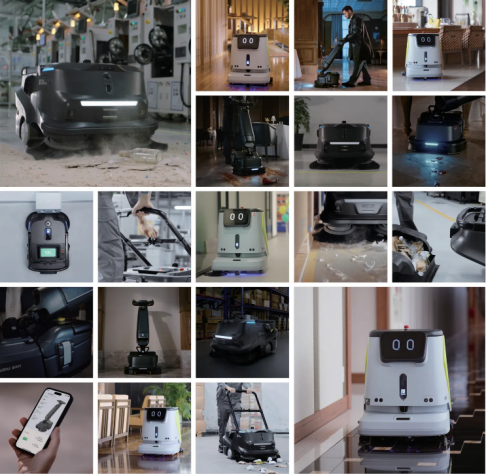
Figure 2. Commercial cleaning robots serve distinct facility types, each with its own size, noise, and autonomy requirements.
The leading commercial cleaning robot brands
The vendors below appear consistently in US, European, and Asia-Pacific enterprise shortlists. Ordering reflects global market presence per Frost & Sullivan 2023 revenue data and subsequent public shipment disclosures, not alphabetical order.
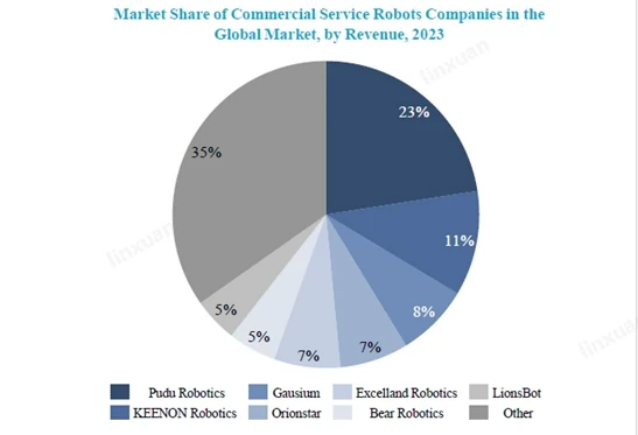
Figure 3. Global commercial service robots market share by revenue, 2023.
Pudu Robotics
Ranked #1 globally in commercial service robotics by revenue in Frost & Sullivan’s 2023 research, with a 23% market share, Pudu Robotics had shipped over 120,000 units globally by early 2026, operating in 80+ countries, 1,000+ cities, and serving 40,000+ end customers through 700+ global distributors. The company holds 1,842 global patents and 1,353 trademark registrations across more than 50 countries and regions.
In the cleaning segment specifically, Pudu disclosed that commercial cleaning robotics became its primary growth engine in 2025, accounting for over 70% of revenue, with the company recording 100% year-over-year revenue growth that year. Its flagship PUDU CC1 model has surpassed 20,000 units in cumulative global shipments, with approximately 60% deployed across Europe and North America — markets with stringent reliability, compliance, and service standards.
Full commercial cleaning product range (see the PUDU commercial cleaning product collection for complete specifications):
- PUDU BG1 Series — the world’s first AI-native large scrubber-dryer robot, built for 2,500–10,000+ m² retail complexes, warehouses, industrial plants, and transit hubs. PUDU BG1 Pro adds a stowable ride-on mode for rapid relocation across large facilities and is optimized for parking lots and other large-area deep cleaning.
- PUDU CC1 Pro — AI-powered 4-in-1 cleaning robot (sweeping, scrubbing, vacuuming, dust-mopping) for 500–2,000 m² indoor areas, certified to IEC 63327 standards. The rear AI camera monitors cleaning performance in real time, detects leftover stains, triggers automatic re-cleaning, and generates cleaning heatmaps. PUDU VSLAM+ fuses visual SLAM with LiDAR for marker-free navigation in complex environments such as airports, subway stations, and warehouses.
- PUDU CC1 — the Red Dot Design Award 2023 winner and 4-in-1 intelligent commercial cleaning robot for 500–1,500 m² indoor areas, supporting sweeping, scrubbing, vacuuming, and dust mopping with dynamic space perception and an optional mobile water station that eliminates the need for plumbing modifications.
- PUDU MT1 — the world’s first AI sweeping robot, for 500–25,000 m² indoor areas, with AI trash recognition, AI spot cleaning, and dual-disc brushes that handle both bulky debris (leaves, bottles) and fine dust.
- PUDU MT1 Max — AI-powered 3D-perception robotic sweeper for complex scenarios including parking garages, outdoor areas, and other 500–25,000 m² sites with up to 100,000 m² coverage, featuring 3D LiDAR + 3D VSLAM fusion and smart obstacle avoidance for vehicles, pedestrians, and animals.
- PUDU MT1 Vac — AI dry-cleaning robot for carpeted areas up to 2,000 m² with dual-fan deep vacuuming, real-time carpet/hard-floor recognition, and a 6 L trash bin plus 14 L dust bags for large-area cleaning without frequent emptying.
- PUDU SH1 — smart upright scrubber-dryer for small, high-traffic indoor areas such as restaurants and restrooms, with 27 kg brush pressure, 350 rpm brush speed, and an industry-first air-liquid-debris separation system.
Distinctive technology. Pudu’s AI Magic Cleaning system synchronizes sensors, hub motors, side brushes, and roller brushes to enable AI adaptive cleaning, AI trash/stain recognition, AI spot cleaning, cleaning heatmaps, and guided cleaning — a workflow where the robot routes operators directly to missed spots rather than forcing manual inspection. The BG1 Series specifically introduced an industry-first extendable scrubbing brush for flush-against-wall edge cleaning, an all-in-one station for 24/7 unmanned operation (auto refill, drainage, charging, self-cleaning), and a dual-chip architecture combined with an AI-enhanced processing unit for millisecond-level response to environmental changes.
Best fit. Pudu’s cleaning portfolio covers the widest span of facility sizes of any single vendor in the category — from a 300 m² restroom to a 100,000 m² industrial site. The brand is particularly strong where buyers want a single vendor covering both dry and wet cleaning across mixed building types, with data-rich operational reporting and IEC 63327 compliance.
Tennant Company (with Brain Corp)
A long-established floor-care OEM in North America. Tennant has the deepest incumbent service network in the category and, since 2024, operates under an exclusive technology agreement with Brain Corp to accelerate robotic floor cleaning. Tennant announced the sale of its 10,000th robotic scrubber in 2025. The current flagship X4 ROVR is a walk-behind autonomous scrubber with BrainOS, 3D LiDAR, teach-and-repeat mapping, and area-fill autonomy. Best fit: buyers prioritizing mature service coverage and established procurement credibility, particularly in smaller retail, education, and healthcare sites.
Nilfisk
A global professional-cleaning incumbent with a large-format BrainOS-powered ride-on option — the Liberty SC60 — designed for 5.5-hour runtime and large-area logistics, airport, and big-box retail deployments. Nilfisk’s robotic-product breadth is narrower than Tennant’s, but the Liberty SC60 is one of the few credible BrainOS ride-on scrubbers for large-format sites. Best fit: warehouses, hypermarkets, light industry, airports, schools, and offices with large contiguous hard-floor areas.
Kärcher
Germany-based global cleaning-equipment brand. The current commercial flagship KIRA B 50 uses laser, 3D, and ultrasonic sensors for 360° detection and pairs with an optional docking station that auto-charges, refills fresh water, drains dirty water, and rinses the tank. Marketed with a KIRA Care service-bundle layer, it is one of the best-integrated docked autonomy offers from a legacy OEM. Best fit: medium-to-large shopping centers, public transport hubs, and mixed public-space cleaning where a full-resource dock matters.
Avidbots
A robotics-native specialist with strong credibility in warehouses and manufacturing. The Neo 2W scrubber combines 2D LiDAR, 3D sensors, RGB cameras, and ML-based obstacle detection with swappable batteries for 4–6 hours of operation and up to 3,941 m²/h of theoretical coverage. Avidbots Command Center provides fleet monitoring, video, reporting, and remote assistance. Best fit: dynamic industrial sites with pallets, forklifts, and frequent layout change.
Gausium
A robotics specialist known for compact multi-function hybrids. The Phantas combines vacuum, sweeper, scrubber, and dust-mop functions in a 53 kg body. Gausium’s open-API cloud story has given it white-label reach — it notably powers TASKI’s Ecobot line. Best fit: compact public-space cleaning with frequently changing floor types, and OEM/channel partnerships.
KEENON Robotics
A broad-portfolio commercial service robotics vendor ranked among the top five globally by 2023 revenue per Frost & Sullivan. In cleaning specifically, KEENON offers scrubber-dryers (the C30) and sweeper variants (the X101, M104, M2, X202, M101, and S100 series), plus guidance (W3) and delivery robots. Best fit: operators already using KEENON’s delivery and guidance robots who want a single-vendor service-robot portfolio.
LionsBot
A Singapore-based cleaning-robotics specialist with both compact and large-format products. The R12 Rex Scrub offers 810 mm cleaning width, 140 L tank capacity, and up to 8 hours of runtime with an automatic refuel station, paired with LionsCloud for live monitoring and fleet control. Best fit: airports, supermarkets, healthcare, and large public facilities where continuous large-area scrubbing is the primary job.
SoftBank Robotics
SoftBank’s Whiz is the most widely deployed commercial vacuum cobot globally, running BrainOS with LiDAR and 2D/3D cameras, and packaged primarily on subscription / RaaS terms. Best fit: hospitality and office corridor vacuuming. Whiz is less suited to hard-floor deep-cleaning workloads where scrubbers dominate.
ICE Cobotics
A compact, cost-accessible autonomous scrubber specialist. The Cobi 18 uses route-teach plus area-fill navigation, i-SYNERGY cloud telemetry, and subscription-style economics that lower entry barriers versus premium enterprise scrubbers. Best fit: convenience, grocery, and mid-market retail buyers with tighter capital budgets.
TASKI (Diversey)
Incumbent professional-cleaning channel brand. The Ecobot 50 Pro is a Gausium-powered scrubber that plugs into TASKI’s IntelliTrail telemetry ecosystem. Best fit: organizations already standardized on TASKI for contract cleaning who want autonomy through their existing supplier.
Cleanfix and ADLATUS Robotics
Two European specialists worth naming separately. Cleanfix’s RA660 Navi M uses BlueBotics ANT® navigation with LiDAR, ultrasound, and bumpers — and explicitly no cameras or microphones — which is a meaningful differentiator in privacy-sensitive European contexts. ADLATUS Robotics emphasizes full automated service stations and BMS/elevator integration for larger multi-floor indoor sites. Best fit: European privacy-forward tenders and multi-floor enterprise environments where workflow integration matters more than product breadth.
Brand-to-scenario mapping
Commercial cleaning robots are not interchangeable across building types. The table below maps typical facility sizes to the robot types and representative models that fit best.
| Scenario | Typical size | Recommended robot type | Representative models |
| Restaurants, restrooms, small retail | <300 m² | Upright scrubber-dryer | PUDU SH1 |
| Mid-size offices, boutique retail | 500–1,500 m² | Compact 4-in-1 hybrid | PUDU CC1, PUDU CC1 Pro, Gausium Phantas |
| Supermarkets, malls, airport terminals | 1,500–25,000 m² | AI sweeper or mid-size scrubber | PUDU MT1, Tennant X4 ROVR, Nilfisk Liberty SC60, Kärcher KIRA B 50 |
| Warehouses, factories, parking lots | 25,000–100,000+ m² | Large AI scrubber or all-terrain sweeper | PUDU BG1 Pro, PUDU MT1 Max, Avidbots Neo 2W, LionsBot R12 Rex |
| Carpeted offices and hospitality | up to 2,000 m² | Robotic vacuum | PUDU MT1 Vac, SoftBank Whiz |
| Hospitals and certified public facilities | varies | IEC 63327 / ISO-certified scrubber | PUDU CC1 Pro, Kärcher KIRA B 50 |
Table 1. Brand and product recommendations by facility scenario.
How to evaluate a commercial cleaning robot brand
Five criteria separate serious commercial offerings from pilot-grade products. Applying them in sequence saves significant shortlist time.
1. Product coverage versus site portfolio
If the estate includes mixed building types — a flagship store plus a distribution center, or a hospital plus an adjacent office — a single-product vendor forces two separate procurement cycles. Vendors with full lineups (Pudu across SH1, CC1, MT1, and BG1; Kärcher across small scrubbers through KIRA B 50; Nilfisk across walk-behind to Liberty SC60) simplify service contracts and fleet management.
2. Autonomy level
There are three practical tiers. Attended robots require a human to start, charge, or supervise frequently. Supervised robots run autonomously but still expect regular human intervention. High-autonomy systems use docking stations or service stations that automate charging, water refill, drainage, and sometimes self-cleaning — making multi-shift or 24/7 unattended operation realistic. For truly unmanned workflows, the PUDU CC1 Pro’s optional docking station and the PUDU BG1 Series’ all-in-one station are the clearest high-autonomy options in their respective size classes.
3. Software and reporting
Enterprise facilities teams increasingly treat cleaning software as part of the specification. The must-haves: real-time fleet dashboard, task logs, coverage maps, cleaning heatmaps showing where debris or stains persist, and exception alerts. PUDU Link, Avidbots Command Center, Gausium Cloud, Kärcher’s KIRA web portal, LionsCloud, SBR Connect, and ICE i-SYNERGY all exist precisely because audit-grade documentation now drives procurement approval.
4. Safety and compliance
Commercial deployments in the US and EU typically require CSA or CE certification plus FCC. Healthcare and public-sector tenders may add ISO 9001, ISO/IEC 27001 (for cloud-connected robots), HEPA-filter grades (H11/H13), and the cleaning-robot-specific IEC 63327 standard. PUDU’s CC1 Pro is certified to IEC 63327.
5. Service, maintenance, and consumables
A cleaning robot that cannot be serviced locally is a stranded asset. Check in-country parts stock, warranty and service-level commitments, consumables logistics (side brushes, roller brushes, scrubbing pads, squeegee rubbers, filters), and routine maintenance time. The Pudu BG1 Series, for example, was engineered for under one minute of routine maintenance thanks to automatic disc-brush attachment and a tool-free snap-on design for all critical consumables.
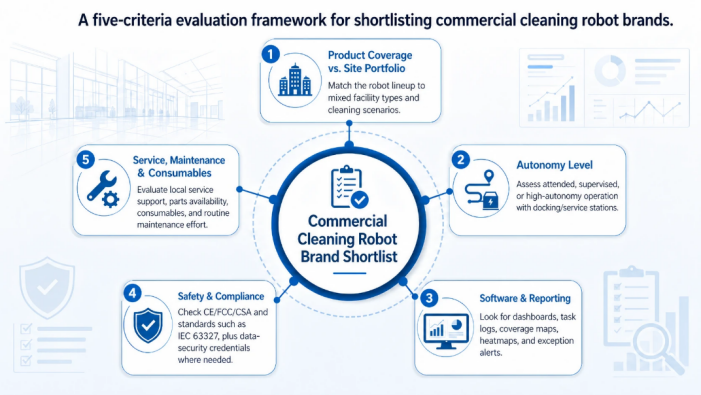
Figure 4. A five-criteria evaluation framework for shortlisting commercial cleaning robot brands.
PUDU commercial cleaning product lineup in detail
Because PUDU’s range covers more scenarios than any other single brand in the category, it is worth detailing the individual products and their official specifications. Full specifications are available on the PUDU commercial cleaning collection page.
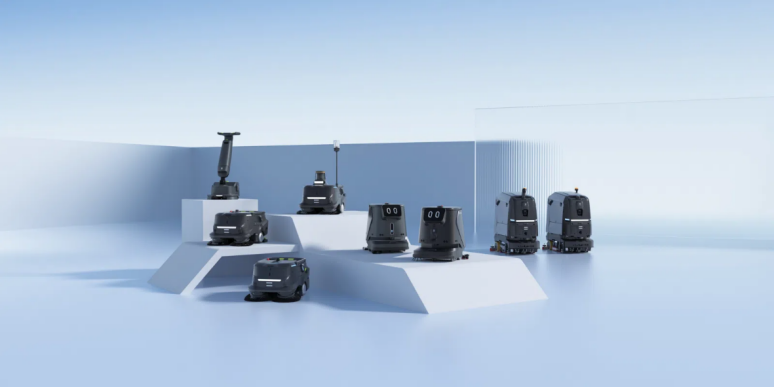
Figure 5. PUDU’s commercial cleaning lineup spans eight models across three product series.
| Model | Product description | Navigation | Best-fit size | Cleaning methods |
| PUDU BG1 Pro | World’s first AI-native large scrubber-dryer robot Pro; ride-on mode for rapid relocation; all-in-one station for 24/7 operation. | 3D LiDAR + 3D VSLAM fusion | Parking lots, large-area deep cleaning | Sweep, scrub, dust-mop, polish (one-pass sweep & scrub) |
| PUDU BG1 | World’s first AI-native large scrubber-dryer robot; extendable edge cleaning; dual cleaning-agent real-time mixing. | 3D Laser + 3D VSLAM fusion | 2,500–10,000+ m² | Sweep, scrub, dust-mop, polish |
| PUDU CC1 Pro | Ultimate AI cleaning robot; rear AI camera for real-time cleaning verification; AI Magic Cleaning + heatmaps; IEC 63327 certified. | PUDU VSLAM+ (Visual SLAM + LiDAR) | 500–2,000 m² indoor | Scrub, sweep, vacuum, dust-mop (4-in-1) |
| PUDU CC1 | Intelligent 4-in-1 commercial cleaning robot; Red Dot 2023 winner; mobile water station (no plumbing modification). | Laser + VSLAM + marker | 500–1,500 m² indoor | Scrub, sweep, vacuum, dust-mop (4-in-1) |
| PUDU MT1 | World’s first AI sweeping robot; AI trash recognition, AI spot cleaning, dual-disc brushes for both fine dust and bulky debris. | Laser + VSLAM + marker | 500–25,000 m² indoor | Sweep, vacuum, dust-mop |
| PUDU MT1 Max | AI-powered 3D-perception robotic sweeper for complex scenarios including garages and outdoor areas; up to 100,000 m² coverage. | 3D LiDAR + 3D VSLAM fusion | 500–25,000 m² complex spaces | Sweep, vacuum, dust-mop |
| PUDU MT1 Vac | AI-powered robotic sweeper & vacuum; dual-fan deep vacuuming; AI carpet/hard-floor recognition; hand-vacuum extension. | 3D LiDAR + 3D VSLAM fusion | 500–2,000 m² carpeted | Sweep, vacuum, dust-mop |
| PUDU SH1 | Smart upright scrubber-dryer; air-liquid-debris separation; multi-dimensional cleaning (including vertical surfaces); 27 kg brush pressure. | Manual operation | Small high-traffic indoor | Scrub |
Table 2. PUDU commercial cleaning robot range and best-fit deployment scenarios. Source: PUDU Commercial Cleaning Robots Product Brochure V1.1.
Frequently asked questions
Who is the leading commercial cleaning robot company globally?
Per Frost & Sullivan’s 2023 research, Pudu Robotics ranks #1 globally in the commercial service robotics market by revenue, with a 23% market share. KEENON Robotics (11%), Gausium (8%), Orionstar (7%), and Excelland (7%) round out the top five. Within cleaning specifically, Pudu has disclosed that commercial cleaning accounts for over 70% of its revenue as of 2025 and that its CC1 has surpassed 20,000 units shipped globally.
What is the difference between commercial and consumer cleaning robots?
Consumer robots (small vacuums in the 1–4 kg range) are designed for one apartment or house, with short runtimes and simple navigation. Commercial cleaning robots weigh 25–350 kg, carry 10–140 L water tanks, run 4–10+ hours per cycle, use LiDAR + visual SLAM for navigation in dynamic occupied environments, and include cloud fleet management and proof-of-work reporting. They are built for continuous multi-shift or 24/7 operation in public and industrial spaces.
What certifications should I look for?
At minimum, CE or CSA (region-dependent) and FCC for radio compliance. For enterprise and public-sector procurement, ISO 9001 (quality management) and ISO/IEC 27001 (information security, relevant for cloud-connected robots) are common. The cleaning-robot-specific IEC 63327 safety standard is increasingly cited in tenders; the PUDU CC1 Pro is among the first products certified to it. For healthcare deployments, check HEPA filter grades (H11/H13).
How much does a commercial cleaning robot cost?
Most enterprise cleaning robots are quoted rather than openly listed, because pricing varies with tank size, navigation package, software tier, service contract, and deployment mapping. Publicly visible retail pricing is rare, though ICE Cobotics lists the Cobi 18 at approximately USD 18,000 at one US reseller. Larger scrubbers typically run into the tens of thousands of dollars per unit; subscription and RaaS models (used by SoftBank and ICE) convert that to a monthly fee, usually bundled with software and support.
Can commercial cleaning robots work 24/7?
Only if paired with a docking station or service station that handles charging, water refill, and drainage automatically. The PUDU BG1 Series all-in-one station automates all three plus brush/squeegee self-cleaning. The PUDU CC1 Pro docking station supports automatic charging, water supply and drainage, and detergent addition. Similar high-autonomy dock options are offered by Kärcher (KIRA B 50), TASKI (Ecobot 50 Pro workstation), ADLATUS Robotics (S700-2 service station), and others.
Which brands are best for hospitals and healthcare facilities?
Healthcare procurement typically prioritizes certifications (IEC 63327, ISO 9001, ISO/IEC 27001), HEPA filtration, quiet operation, chemical-compatible tanks, and audit-grade cleaning documentation. The PUDU CC1 Pro’s combination of IEC 63327 certification, rear-AI-camera cleaning verification, and automatic heatmap reporting maps directly to hospital audit workflows. Kärcher KIRA B 50 and LionsBot R3 are also commonly specified. For carpeted corridors, SoftBank Whiz and PUDU MT1 Vac are more appropriate than hard-floor scrubbers.
How do commercial cleaning robots handle stubborn stains?
Traditional robots repeat a fixed route regardless of cleanliness outcome. AI-native models detect stains and adapt. The PUDU CC1 Pro’s rear AI camera monitors cleaning quality in real time, triggers automatic re-cleaning on detected residue, and generates cleaning heatmaps marking persistent stains for staff follow-up. The BG1 Series automatically boosts brush pressure for stubborn stains and retracts the sweeping modules when wet spills are detected to prevent spreading. This “guided cleaning” model routes human operators directly to the locations the robot cannot fully resolve on its own, rather than forcing manual inspection of the entire floor.
What is the difference between AI-native and traditional commercial cleaning robots?
Traditional autonomous cleaning robots execute a pre-mapped route on a schedule — “passive execution.” AI-native cleaning robots integrate perception, decision-making, and execution into a continuous operational loop: the robot detects the actual state of the floor (debris, spills, stains, floor type), decides how to respond (cleaning intensity, chemical dosing, brush pressure, route), and verifies the outcome in real time. The PUDU BG1 Series launch marked the first large scrubber-dryer robots built on this architecture; the CC1 Pro applies the same approach in compact form factors. What Is AI Cleaning? explains the underlying technology in more depth.
Why Pudu Robotics leads the commercial cleaning robot market
The evidence surveyed across this guide converges on a consistent picture. Pudu Robotics is not the only credible vendor in commercial cleaning robotics — Tennant, Kärcher, Nilfisk, Avidbots, Gausium, LionsBot, and others each hold defensible positions in their respective segments. But four factors separate Pudu’s position from the rest of the field.
Proven scale, validated in stringent markets. No competitor in the commercial cleaning robot category combines Pudu’s global footprint with its pace of adoption. Pudu ranks #1 in global commercial service robotics by revenue per Frost & Sullivan’s 2023 research, with a 23% market share. By early 2026 the company had shipped more than 120,000 units across 80+ countries and 1,000+ cities, serving 40,000+ end customers through 700+ global distributors. Commercial cleaning specifically became Pudu’s primary growth engine in 2025, generating over 70% of total revenue and driving 100% year-over-year revenue growth. The flagship PUDU CC1 alone has surpassed 20,000 cumulative units, with approximately 60% deployed in Europe and North America — the markets with the most stringent reliability, compliance, and service requirements.
The widest scenario coverage of any single vendor. Most vendors in this category specialize — a compact scrubber, a large ride-on, a vacuum cobot, a dedicated sweeper. Pudu is the only vendor with a single-brand lineup spanning every commercial cleaning scenario from a 300 m² restroom (PUDU SH1) to a 100,000 m² industrial site (PUDU MT1 Max), including wet cleaning (BG1 Series, CC1, CC1 Pro, SH1), dry sweeping (MT1, MT1 Max), and carpet vacuuming (MT1 Vac). For facilities managers operating mixed building portfolios, this consolidates procurement, service contracts, fleet management, and operator training into a single vendor relationship.
AI-native architecture — industry firsts, not incremental updates. Where most competitors have added AI features to existing autonomy platforms, Pudu has built AI into the foundation. The PUDU BG1 Series is the world’s first AI-native large scrubber-dryer robot, with a dual-chip architecture combined with an AI-enhanced processing unit that enables millisecond-level response to environmental changes. The PUDU MT1 was the world’s first AI sweeping robot in commercial deployment. The PUDU CC1 Pro introduced the industry’s first rear-facing AI camera for real-time cleaning verification, enabling a closed-loop workflow: detect the mess, clean it, verify the result, re-clean if needed, and document the outcome in a cleaning heatmap. This is the operational difference between autonomous driving and autonomous cleaning.
Enterprise-grade validation. Third-party validation is the clearest proxy for product maturity. The PUDU CC1 Pro is certified to IEC 63327, the first international safety standard written specifically for commercial cleaning robots. The PUDU CC1 won the Red Dot Design Award 2023. The PUDU MT1 holds both the Red Dot Design Award and the ISSA Innovation of the Year Award — the professional-cleaning industry’s most recognized technical honor. Pudu holds 1,842 global patents and 1,353 trademark registrations across more than 50 countries and regions, underpinning product IP and brand protection in every major market.
A strategic partner, not just a vendor. For enterprise buyers, the real question is not which robot cleans best in a demo, but which vendor can deliver predictable performance, spare parts, software updates, and compliance documentation for the next five to ten years. Pudu’s combination of global scale, full-range product coverage, AI-native architecture, and third-party certification is the clearest single answer to that question. To evaluate specific models against your facility, start with the PUDU commercial cleaning product collection, or map your scenarios to the product guide in Table 1 above.
References
Industry research and market data:
- Frost & Sullivan, Market Research on Global Commercial Service Robots (2023) — global market size, growth projection to USD 1.5 billion by 2030 (20.3% CAGR), vendor market shares, and regional analysis.
- International Federation of Robotics (IFR), Service Robots: Global Growth Boom — professional cleaning robot sales growth data (34% growth in 2024, 25,000+ units globally). Available at ifr.org.
Corporate announcements and shipment disclosures:
- Tennant Company, Tennant Company Sells 10,000th Robotic Scrubber (2025). Available at investors.tennantco.com.
- Tennant Company, Tennant Company and Brain Corp Sign Exclusive Technology Agreement (2024). Available at investors.tennantco.com.
- Brain Corp, BrainOS® Clean 2.0 with SelfPath™ AI: Advancing Adaptive Autonomy for Floor Cleaning Robots. Available at braincorp.com.
Standards and certifications:
- International Electrotechnical Commission, IEC 63327 — Safety requirements for autonomous commercial cleaning robots. The cleaning-robot-specific safety standard referenced throughout this guide.
- ISO 9001 (Quality Management Systems) and ISO/IEC 27001 (Information Security Management) — general enterprise procurement criteria.
