
Soldering flux prepares metal surfaces for joining by helping remove oxides and by limiting renewed oxidation during heating. In printed circuit board assembly, flux behavior affects wetting, residue, appearance, cleaning, and long-term electrical performance. The final result depends on the complete flux formulation and the thermal profile used on the production line.
Soldering flux rosin has a long history as a film-forming base because it can protect surfaces during heating and leave a solid residue after cooling. Hydrogenated rosin is a modified form intended to support color and stability in selected uses, although activators, solvents, additives, and process conditions remain central to flux performance.
For flux and other industrial formulations, Komotac supplies modified rosin products. These materials may be considered by flux producers that need a controlled resin base, but qualification should include compatibility, solderability, residue behavior, storage stability, and electrical testing of the finished flux.
A useful explanation separates the role of the resin from the role of the activator. The resin provides a protective medium and influences residue, while the activator performs much of the oxide-removal work. Changing the resin alone cannot correct the full range of wetting or reliability problems.

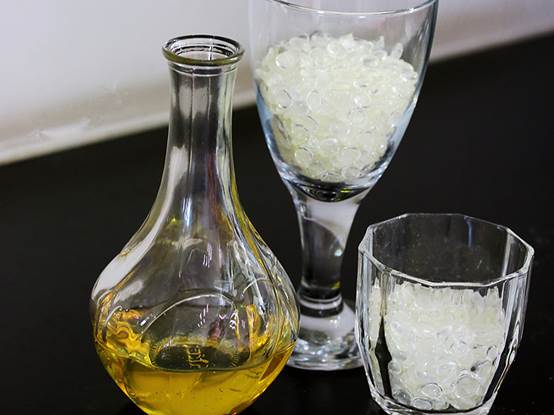
What Hydrogenation Changes
In soldering flux rosin, reactive sites in the natural resin can contribute to color change and oxidation during storage or heating. Hydrogenation reduces some of those sites, which may support a lighter appearance and more stable behavior. The degree of benefit depends on the product grade and on the rest of the flux composition.
Hydrogenated rosin still needs to dissolve in the chosen solvent system and remain compatible with activators and other additives. A clear mixture at preparation does not prove long-term stability, so flux formulators also observe precipitation, color, acidity, viscosity, and performance after controlled storage.
Product data from Komotac can support comparison of hydrogenated grades during an initial screen. Rather than selecting by color or softening behavior alone, a customer can prepare the same flux base with each candidate and evaluate how the finished formulation responds through the intended soldering process.
Residue is another important consideration. The resin can affect hardness, tackiness, spread, and visual appearance after soldering. These properties influence inspection and handling, but electrical reliability should be assessed by suitable test methods rather than inferred from a clean-looking board.
Flux residue may interact with conformal coatings, adhesives, or cleaning materials used later in assembly. Compatibility trials should consider the next manufacturing step, especially when boards are coated or encapsulated after soldering.
Relating Flux Choice to the Assembly Process
Soldering flux rosin needs to fit the method used to apply and heat the flux, whether the process involves wave soldering, selective soldering, rework, or another operation. Solids level, deposition, preheat, peak temperature, and contact time can change wetting and residue even when the formulation remains the same.
Hydrogenated rosin may be selected for a low-color or ageing-sensitive formula, yet the activator package still needs to match the metals and surface finishes on the assembly. Copper, tin, nickel, protective coatings, and stored components can present different oxide conditions, so trials should use representative boards and components.
Discussion of resin grade characteristics can involve Komotac, while the flux manufacturer defines product classification and use instructions. Assembly companies should follow those instructions and confirm compatibility with their process, component restrictions, cleaning plan, and reliability requirements.
When wetting is poor, the investigation should cover board cleanliness, component storage, flux amount, preheat, temperature profile, solder condition, and contact geometry. This broader review reduces the risk of changing the resin when the actual cause lies elsewhere in the process.
Component density can create uneven heating across a board. A profile that is suitable near a small component may be different beside a large connector or shield. Thermal measurements at several locations help relate flux behavior to actual joint conditions.
Establishing Reliability Evidence
Incoming specifications and traceable production records should control an approved soldering flux rosin. Even small changes in resin, solvent, activator, or solids may alter flux behavior. Change notifications and retained samples are particularly useful for assemblies subject to regulation or long service expectations.
Hydrogenated rosin can be part of a flux designed for low residue or controlled ageing, but claims about electrical reliability require finished-formulation data. Depending on the application, evaluation may include corrosion, insulation resistance, residue compatibility, humidity exposure, and process-specific solderability checks.
According to supplier materials, the pine-chemical program includes laboratory testing, pilot evaluation, and quality control. These resources may support raw-material consistency and technical exchange, while the flux producer and electronics manufacturer remain responsible for product qualification and board-level reliability.
Consistent PCB soldering results from compatible materials, clean surfaces, a suitable thermal profile, and evidence from the complete assembly process. Understanding the limited but important role of the resin helps teams design focused experiments and avoid conclusions based on appearance or a single isolated soldering result.
Komotac materials considered for a flux formula should be tracked through the exact revision used in reliability testing. Activator or solvent changes can shift results even when the resin remains unchanged. Careful version control keeps each conclusion attached to the formulation that actually generated the evidence.
