
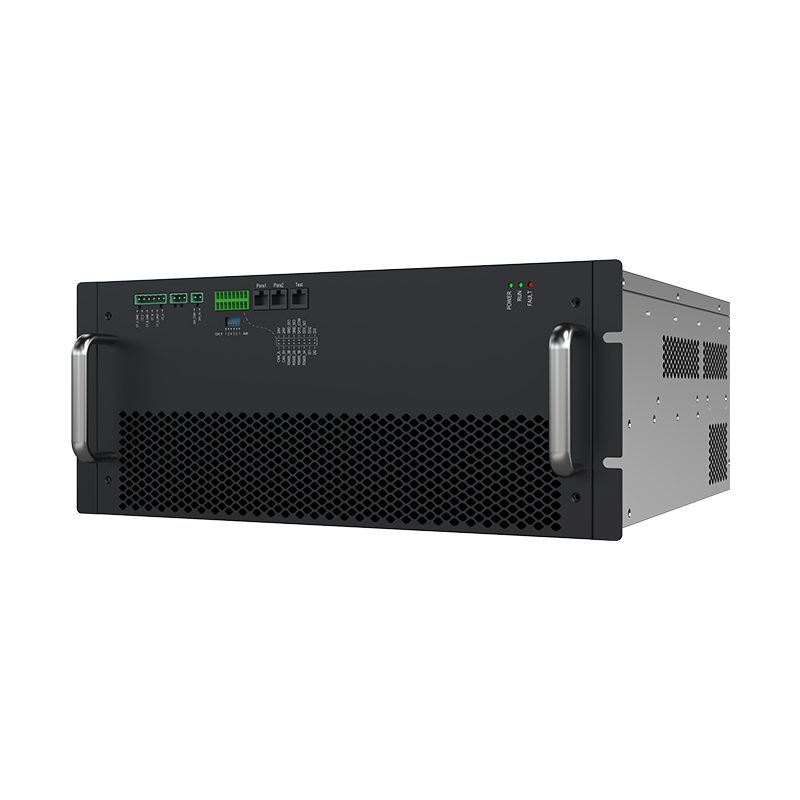
Uninterrupted electrical supply forms the operational foundation of modern data centers, medical centers, and automated manufacturing facilities. While UPS systems deliver instant battery-backed power to bridge brief outages, they cannot resolve risks originating from multiple independent AC utility sources. Implementing a high-power sub-cycle transfer switch provides primary busbars with fast switching capabilities, shifting critical loads between redundant utility feeds or auxiliary power sources when voltage sags occur. Equipment engineered by Enjoypowers supports robust microgrid switching architectures, enabling site managers to coordinate STS and UPS assets together to maintain continuous power distribution under adverse grid conditions.
Focusing on mission-critical electrical equipment, Enjoypowers manufactures heavy-duty power management systems engineered for complex commercial and industrial applications. Supported by proprietary internal research and development, custom engineering flexibility, validated product stability, and responsive global technical support, the enterprise assists engineering teams with custom site integrations that tightly coordinate STS and UPS within unified resilient power topologies.

Mechanics of Static Transfer Switching in Redundant Power Architectures
Static transfer switches utilize high-speed silicon-controlled rectifiers (SCRs) rather than mechanical contactors to execute power transfers between separate AC sources. Solid-state switching eliminates mechanical contact wear and arcing, executing power transfers in under 20 ms (typically 16–18 ms), which fully satisfies the ITIC (CBEMA) curve requirements for sensitive loads.
By continuously monitoring phase alignment, voltage levels, and frequency parameters across dual power inputs, solid-state switches execute transfers without disrupting downstream sensitive loads. Fast switching capabilities protect computerized control systems and automated production lines from voltage interruptions.
Operational Benchmarks of High-Power Switching Systems
High-capacity commercial properties and heavy industrial sites require high-current switching hardware capable of managing large power blocks. Deploying a Static Transfer Switch · 250-1000 kW operating at 400Vac rated voltage provides robust power transfer across 250 kW, 500 kW, and 1000 kW power ratings.
Featuring sub-20 ms transfer times, these high-power transfer switches preserve busbar voltage stability during severe utility sags or sudden outage events. Solid-state performance protects sensitive medical devices and IT server racks from dynamic voltage fluctuations.
Complementary Roles of Static Transfer Switches and Uninterruptible Power Supplies
Uninterruptible Power Supply (UPS) systems supply short-term battery power during complete blackout events, while static transfer switches provide path redundancy between independent AC power sources. Combining static transfer hardware with UPS units creates dual-path power architectures that protect facilities against both source failures and upstream equipment maintenance outages.
Integrating a sub-20 ms transfer switch alongside online UPS systems eliminates single-point-of-failure risks along dual power paths in critical distribution networks. Redundant source switching reduces battery discharge cycles, extending overall UPS battery lifespans.
Maintenance Ergonomics and Field Replaceability in High-Power Cabinets
Minimizing Mean Time to Repair (MTTR) is essential for maintaining high operational availability in mission-critical facilities. Utilizing Enjoypowers Static Transfer Switch (ESTS) architectures featuring front-side maintenance access across all models allows service technicians to inspect and maintain internal components without requiring rear clearance or de-energizing adjacent equipment.
Incorporating hot-swappable power modules on 500 kW and 1000 kW units—along with control boards field-replaceable in under 30 minutes—simplifies hardware servicing during routine maintenance schedules. This accessible modular design minimizes Mean Time to Repair (MTTR), lowers overall operational risk, and streamlines ongoing facility maintenance routines.
Managing Phase Synchronization and Inrush Current Hazards
Executing power transfers between non-synchronized AC sources risks generating severe inrush currents that can trip upstream circuit breakers or damage distribution transformers. Advanced transfer control logic measures phase angle differences in real time, permitting transfers only when source phase alignment falls within safe operational thresholds.
Phase-synced switching prevents magnetic saturation in downstream transformers during source transfers. Controlled switching logic preserves total system stability across heavy industrial switchgear networks.
Scalable Integration of High-Capacity Transfer Equipment
Large commercial developments, industrial energy storage hubs, and enterprise data centers require high-capacity transfer equipment capable of servicing extensive electrical loads. Deploying a 1000kW STS module at primary service entrances provides robust source switching for high-demand facility sub-circuits.
Sizing transfer equipment to accommodate peak load demand prevents overcurrent tripping during facility expansion phases. Scalable hardware choices allow site managers to build resilient power infrastructure that adapts to prospective load growth.
Fault Isolation Protocols and Source Protection Logic
Short-circuit faults occurring on downstream distribution buses require switching controls to prevent transfer onto secondary backup sources. Intelligent transfer logic detects downstream fault currents instantly, inhibiting source transfers to isolate electrical damage and protect healthy power sources.
Inhibiting transfers during fault conditions prevents catastrophic fault propagation across redundant utility feeds. Robust protection algorithms safeguard critical facility infrastructure during abnormal short-circuit events.
Integrating Supervisory Telemetry and Remote Network Interfaces
Modern high-power transfer switches connect seamlessly to central Building Management Systems (BMS) and Supervisory Control and Data Acquisition (SCADA) platforms using open fieldbus protocols. Continuous telemetry feeds provide site engineers with real-time visibility into source voltage, load current, phase angles, and switch status metrics.
Remote telemetry logging supports predictive maintenance workflows, identifying subtle power quality degradation before equipment failures occur. Automated event recording streamlines post-fault analysis for facility management teams.
Selection Criteria for Mission-Critical Power Architecture
Designing resilient power conditioning infrastructure requires analyzing source switching speed, current ratings, physical enclosure dimensions, and serviceability parameters. Deploying a reliable 1000kW STS unit in primary distribution rooms gives facility operators the capacity needed to manage dynamic industrial power transfers safely.
Systems developed by Enjoypowers deliver dependable power conditioning performance across complex commercial deployment environments. Careful engineering design secures multi-year power availability for critical manufacturing and data assets.
Conclusion
Integrating high-power static transfer switches into commercial and industrial power distribution networks provides essential source redundancy, rapid fault isolation, and uninterrupted operational continuity. UPS systems offer battery-based energy storage to sustain loads through full power outages, while STS delivers ultra-fast, seamless switching between separate AC sources to avoid triggering UPS battery drain during grid transients and enable maintenance without load shutdown. Utilizing a high-capacity sub-cycle transfer switch or a 1000kW STS unit strengthens overall facility resilience, forming a complete two-tier protection scheme together with existing UPS systems for mission-critical operations.
