
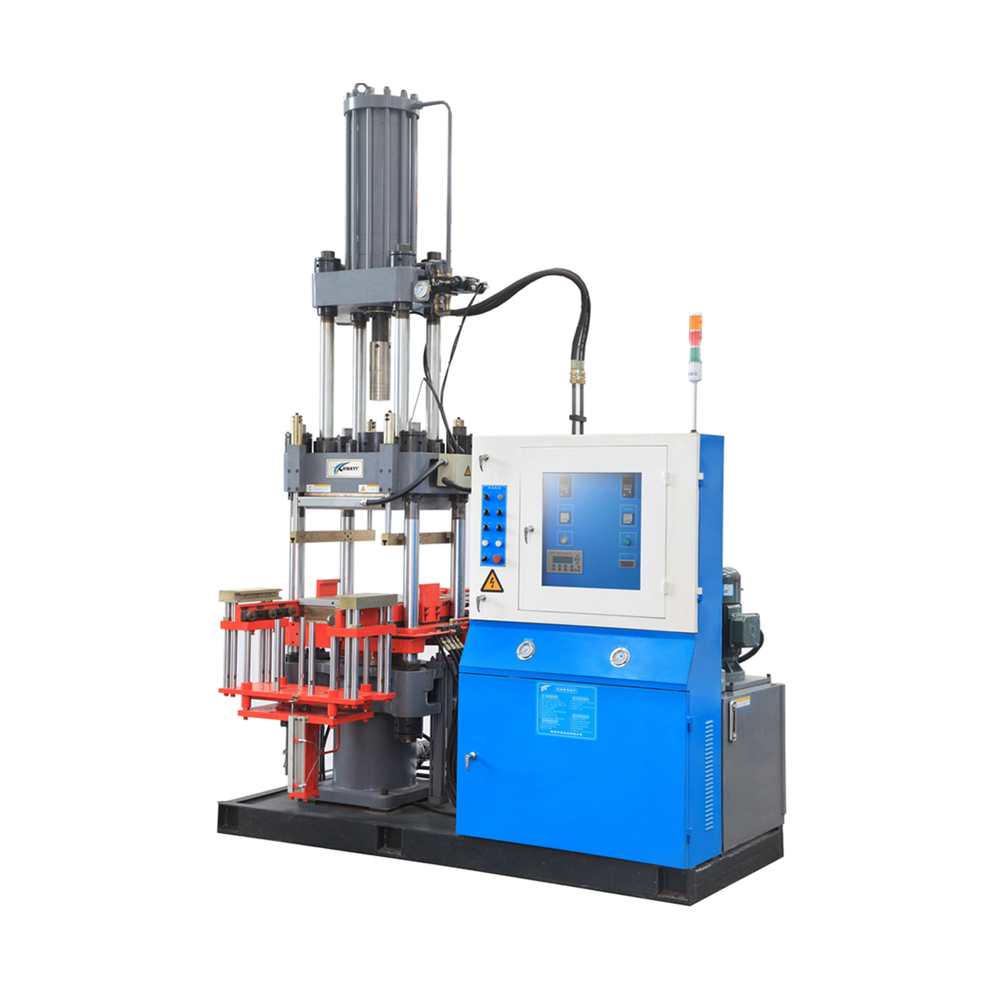
Modern rubber manufacturing relies heavily on well-chosen curing and forming equipment to maintain batch consistency, elevate production efficiency, and secure stable long-term operation. A rubber vulcanizing machine plays a central role in shaping materials such as natural rubber, EPDM, and silicone into final industrial components. Among various technologies, the vulcanized rubber mold machine is widely applied due to its adaptability in different molding processes. HWAYI, a manufacturer focused on industrial equipment solutions, develops vulcanizing systems designed to meet the operational requirements of diverse rubber manufacturing applications.
Control System and Hydraulic Configuration
When sourcing a rubber vulcanizing machine, its control system and hydraulic structure stand as key evaluation indicators. Advanced industrial equipment ensures accurate temperature management, steady pressure performance, and consistent cycle operation. A well-designed vulcanized rubber mold machine integrates advanced PLC and HMI systems to improve operational accuracy and reduce manual intervention.
The rubber transfer molding press offered by HWAYI is equipped with Siemens PLC and HMI systems, alongside Yuken hydraulic pumps and control valves. This premium component configuration boosts system response speed and delivers consistently stable hydraulic performance.

Its open-loop oil circuit design greatly simplifies routine maintenance, enabling operators to carry out upkeep work more conveniently and efficiently. Meanwhile, the integrated oil manifold structure optimizes hydraulic flow distribution, resulting in more streamlined and well-organized hydraulic control.
Thermal Precision and Structural Stability
Temperature control precision and structural design represent further vital criteria for assessing rubber vulcanizing machines. Uniform heating performance directly determines finished product quality, particularly in the production of sealing elements, general industrial rubber parts, and silicone products. High-performance vulcanizing presses must sustain balanced platen temperatures to achieve even and reliable curing effects.
HWAYI equipment adopts PID temperature calibration technology to deliver steady and uniform heating across the entire platen surface. This maintains stable vulcanization conditions for a wide range of rubber materials, such as chloroprene rubber and EPDM. Unlike injection-type models, transfer molding machines require no plasticizing unit, which streamlines overall structure while preserving excellent molding performance.
Application Flexibility and Maintenance Efficiency
Adaptability and ease of maintenance are also vital considerations in industrial equipment selection. Qualified rubber vulcanizing machines should accommodate diverse rubber materials without complex system reconfiguration, while featuring straightforward upkeep to reduce production downtime.
Designed with an open hydraulic layout and modular system partitioning, HWAYI’s transfer molding press simplifies daily maintenance and further enhances long-term operational dependability.
Conclusion
The selection of a suitable rubber vulcanizing machine or vulcanized rubber mold machine depends on multiple factors, including control precision, hydraulic design, thermal stability, and maintenance efficiency. HWAYI integrates these considerations into its engineering approach, delivering equipment that supports stable production performance and long-term industrial reliability for rubber manufacturing applications.
