
Rising energy costs and stricter sustainability targets are pushing businesses to invest in flexible microgrid systems. Yet many system integrators and project developers face a common challenge early in the planning stage: choosing between high-voltage solar architectures using MPPT charge controllers and traditional DC converter-based designs.
The decision affects more than technical performance. It directly impacts installation cost, energy efficiency, long-term maintenance, and future scalability. FSelecting the right PV charge controller strategy can significantly improve project returns while reducing operational complexity.
YUNT has focused on helping commercial and industrial projects build efficient DC-coupled microgrids that balance reliability, flexibility, and long-term value.
Why MPPT-Based DC Coupling Is Gaining Attention

Many modern microgrid projects now favor DC-coupled systems built around advanced MPPT charge controllers. One reason is improved photovoltaic utilization. By continuously tracking the maximum power point of solar arrays, these systems maximize energy harvest throughout the day, even when weather conditions fluctuate.
For project developers, this means more usable solar power without expanding panel capacity. Better generation efficiency translates directly into faster ROI and lower electricity dependence.
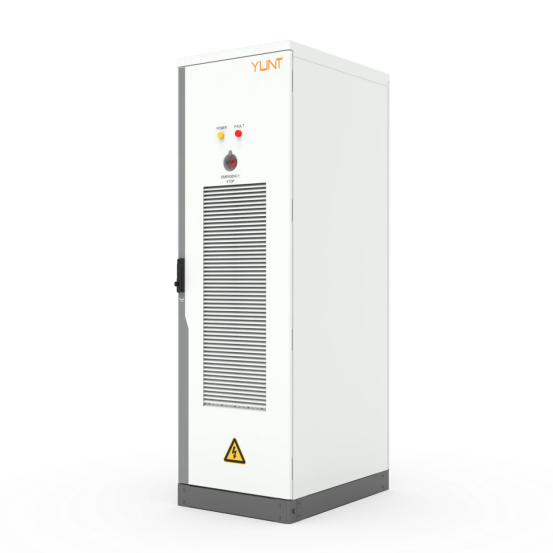
YUNT’s PV charge controller platform is designed to support high-efficiency DC-coupled architectures. Each MPPT module includes circuit breaker protection on the output side, helping integrators improve operational safety while simplifying maintenance procedures.
Compared with traditional converter-heavy systems, fewer conversion stages also reduce energy loss. This becomes particularly valuable in large commercial buildings and industrial parks where every percentage point of efficiency affects operating costs.
Reducing Integration Challenges for System Integrators
Another major business pain point is system integration complexity. Traditional DC converter topologies often require additional coordination between solar generation, battery storage, and switching equipment. This can increase commissioning time and future maintenance risks.
Modern MPPT charge controllers help simplify that process by supporting direct DC coupling between photovoltaic systems and energy storage. YUNT’s solution enables smooth coordination between the PCS module, MPPT module, and STS module, allowing seamless switching between grid-connected and off-grid operation.
This flexibility is especially important for facilities that cannot tolerate downtime. Commercial buildings, manufacturing plants, and energy-sensitive operations need stable power during grid interruptions while still maintaining efficient daily operation.
A good example is the Jiangsu Changzhou Zero-Carbon Buildings project. The site deployed a 300kW/577kWh energy storage system using sodium-ion batteries. The PCS module supports AC/DC parallel operation and achieves DC coupling with the PV charge controller system. Combined with the STS module, the project can transition smoothly between grid-connected and off-grid modes.
Under normal operating conditions, photovoltaic generation and energy storage supply power directly to the building. The result is lower carbon emissions, improved power consumption efficiency, and reduced environmental impact.
Scalability and Long-Term Operational Value
Scalability has become another deciding factor in topology selection. Businesses want energy systems that can expand alongside future demand without major redesigns.
A modular architecture based on MPPT charge controllers allows easier expansion of photovoltaic and storage capacity. This gives system integrators greater flexibility when adapting projects to changing energy requirements.
From a maintenance perspective, simplified DC-coupled systems also reduce potential failure points. Lower maintenance complexity means reduced service costs and improved uptime over the system lifecycle.
For enterprises facing growing electricity cost pressure, the right PV charge controller strategy can create measurable savings while supporting long-term sustainability goals.
Building More Efficient Microgrids with the Right Partner
Choosing between high-voltage solar architectures and traditional DC converter designs is ultimately a business decision as much as a technical one. Efficiency, scalability, operational stability, and future expansion all influence project profitability.
YUNT’s advanced MPPT charge controllers and integrated microgrid solutions help system integrators build flexible, high-performance energy systems for commercial and industrial applications.
