
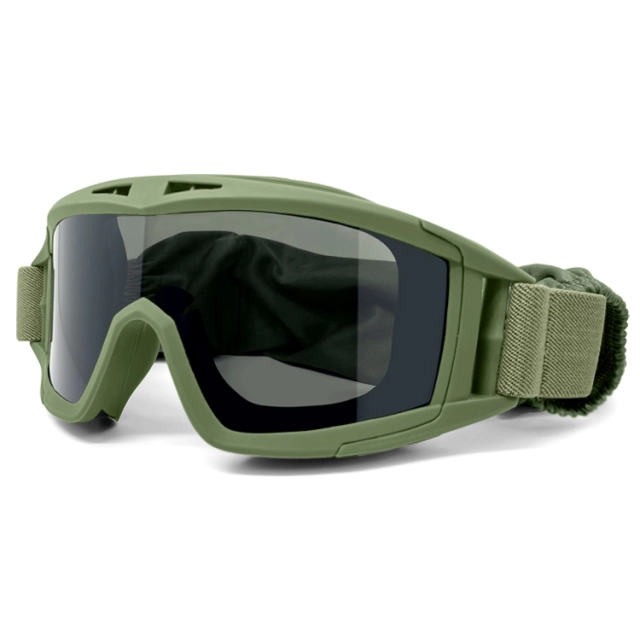
In any tactical environment, visual clarity is not just about comfort but about maintaining situational awareness when conditions change rapidly. Dust, humidity, temperature shifts, and airborne debris are common challenges that affect eye protection performance. For professionals relying on military goggles or operational eyewear, lens stability directly influences decision-making speed and accuracy. This is where optical surface engineering becomes essential rather than optional.
The Functional Role of Anti-Scratch Protection
Anti-scratch coatings are designed to preserve lens integrity when goggles are exposed to friction, impact, or abrasive particles. In field use, lenses often contact helmets, gear straps, or environmental debris. Without a protective coating, even minor scratches can distort vision and reduce contrast perception over time.
For anti-impact tactical goggles, scratch resistance also extends service life by maintaining optical clarity under repeated use. According to protective eyewear standards used in tactical-grade equipment, durable polycarbonate lenses combined with coated surfaces help ensure sustained performance in high-risk conditions where replacement opportunities are limited.

Why Anti-Fog Performance Is Mission-Critical
Fogging is one of the most common visibility failures in military goggles, especially when moving between temperature zones or during high physical activity. Anti-fog coatings address condensation buildup by regulating surface tension and moisture dispersion on the inner lens layer.
Research on anti-fog optical surfaces shows that fog formation can significantly reduce visibility in high-humidity environments, making passive coating systems an important solution for maintaining uninterrupted vision in field operations. In practical use, anti-fog performance ensures that users retain a stable field of view without constant adjustment or removal of goggles.
YIJIA Optical Engineering for Demanding Conditions
At YIJIA Optical, tactical eyewear development focuses on combining impact-resistant materials with layered lens treatments that support real-world use in tactical environments. Products such as anti-impact tactical goggles integrate coated polycarbonate lenses and ergonomic frame structures designed for prolonged wear under varying operational conditions.
These design priorities support consistent optical performance while reducing maintenance needs, particularly in fast-changing field scenarios where reliability is critical.
Conclusion
Anti-scratch and anti-fog coatings are not secondary features but core performance elements in tactical eyewear. They ensure that military goggles remain functional in harsh and unpredictable tactical environments, where visibility directly affects operational effectiveness. For target buyers and distributors, selecting goggles with proven coating systems helps reduce failure rates and improves end-user trust in the product line.
By the way, don’t miss the chance to meet YIJIA Optical at the Canton Fair, May 1-5, at booth 12.0D17, where you’ll find their full range of tactical goggles.
