
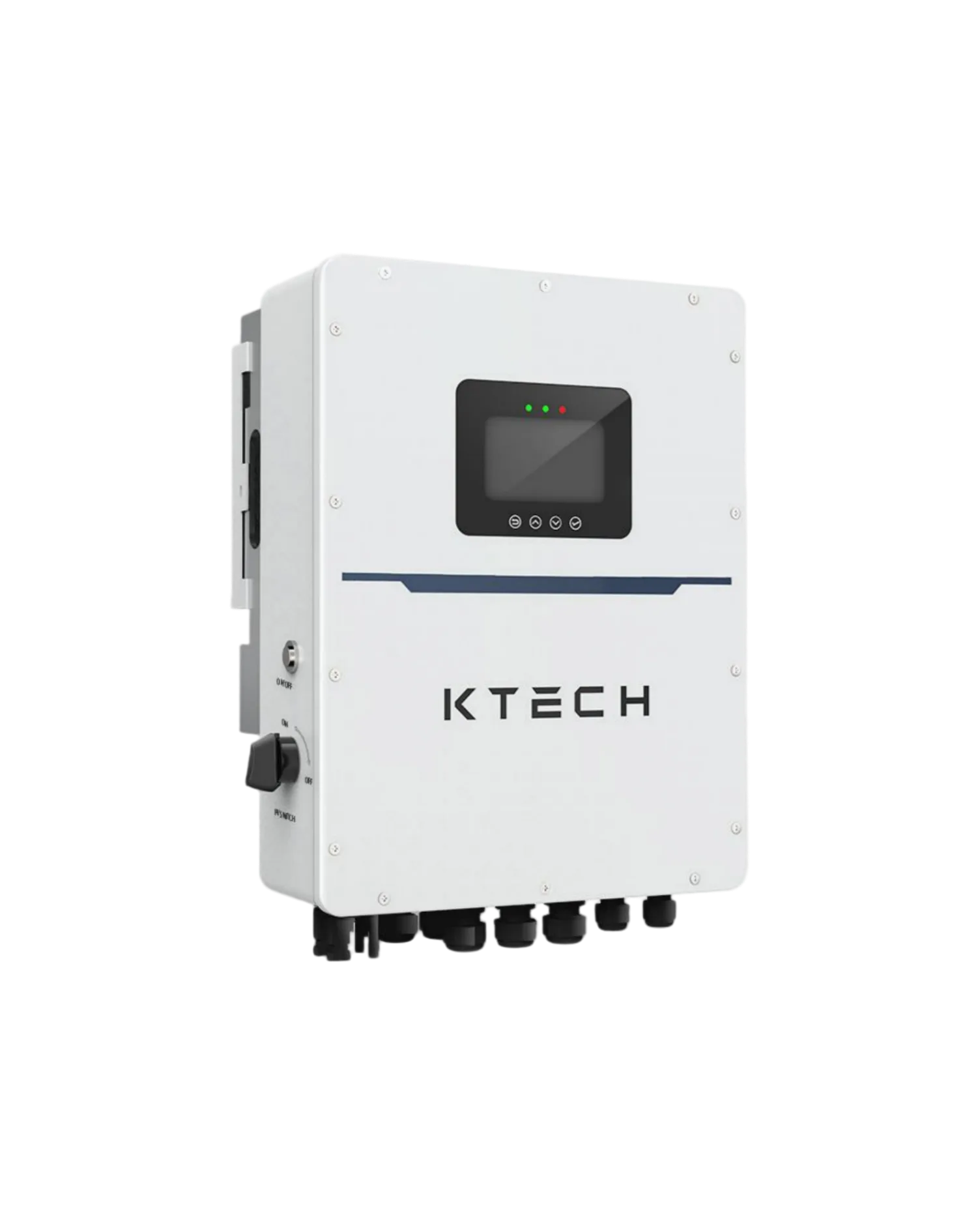
Transitioning to residential photovoltaic energy requires evaluating how efficiently core hardware converts direct current from solar panels into usable alternating current. Selecting an appropriate solar inverter determines how effectively home energy generation meets daily electrical loads while maintaining seamless grid interaction.
Addressing these technical requirements, Ktech engineers robust power conversion platforms alongside integrated smart energy management solutions. With proprietary hardware-software development capabilities and flexible customization options, the manufacturer supplies global distributors and system integrators with stable, long-lasting conversion systems backed by technical training and dedicated after-sales support.

Evaluating Maximum Power Tracking Efficiency Across Variable Irradiance
Residential solar production fluctuates continually throughout the day due to changing sun angles, moving cloud cover, and localized shading. High-performance tracking mechanisms optimize real-time voltage and current operating points to capture maximum available power from solar arrays.
Incorporating conversion technology with MPPT tracking efficiency up to 99% minimizes energy collection losses under dynamic weather conditions. High-precision power point tracking ensures optimal daily generation yield even during overcast mornings or late afternoons.
Managing Time-of-Use Rate Schedules through Multi-Period Programming
Modern electricity utilities frequently enforce time-of-use tariff structures that charge significantly higher rates during peak evening demand hours. Managing battery charging and discharging cycles strategically helps homeowners avoid expensive grid imports.
Configuring systems that support charge and discharge settings for 6 time periods enables precise energy management. Homeowners store cheap daytime solar energy or off-peak grid power, then deploy stored reserves during peak tariff windows to minimize utility expenses.
Evaluating Battery Chemistry Compatibility for Future-Proof Storage
Residential energy storage strategies often dictate whether lead-acid or lithium-based battery technologies best suit budget constraints and performance goals. Choosing conversion hardware with broad chemistry compatibility prevents premature equipment replacement as storage needs evolve.
Integrated power management systems supporting lead-acid / lithium battery connection offer flexible storage design options. System integrators easily adapt battery choices to regional availability or specific homeowner performance preferences.
Integrating Secondary Auxiliary Power for Off-Grid Resilience
Unexpected power grid outages disrupt daily household routines, making emergency backup power essential for maintaining critical appliances. Integrating secondary generation sources prevents power interruption during extended multi-day utility disruptions.
Power units that support diesel generator connection sustain uninterrupted operation when solar generation and battery reserves run low. Automated source blending keeps critical refrigeration, lighting, and communication infrastructure online during severe weather events.
Expanding System Capacity through Parallel Unit Topologies
Growing household electricity consumption—driven by electric vehicles or heat pump additions—frequently demands expanding original solar system capacities over time. Modular hardware architecture enables cost-effective expansion without replacing existing power hardware.
Deploying architectures where support up to 10 units in parallel is available lets homeowners scale overall system output smoothly. Property owners can start with smaller setups like the Hybrid Inverter 3-6kW Single Phase European Grid model and expand total output as energy needs grow.
Assessing Connectivity Protocols for Remote Monitoring and Diagnostics
Maintaining system visibility requires reliable communication links between conversion hardware, local networks, and cloud management dashboards. Diverse wireless and cellular protocols maintain continuous data transfer across varying installation environments.
Integrating systems supporting WiFi / Bluetooth / 4G communication ensures consistent diagnostic telemetry streaming regardless of local network infrastructure. Continuous connectivity enables installers to perform remote firmware updates and monitor operating status without on-site visits. It also facilitates timely fault diagnosis and targeted troubleshooting to cut after-sales service costs for distributed solar and storage projects.
Ensuring Structural Enclosure Integrity under Extreme Weather Conditions
Outdoor inverter installations expose sensitive microelectronics to extreme ambient temperatures, high humidity, rain, and airborne dust. Inadequate environmental sealing leads to internal corrosion and premature component failure.
Selecting conversion equipment with an Ingress Protection (IP) Rating of IP66 provides comprehensive protection against dust ingress and powerful water jets. Robust enclosure sealing maintains stable hardware operation across harsh outdoor weather conditions over years of continuous service.
Implementing the Hybrid Inverter 3-6kW Single Phase European Grid Setup
Deploying efficient single-phase residential energy solutions requires matching grid standards with robust safety features and high conversion yield. Modern single-phase systems simplify grid connection while offering full hybrid battery management. These integrated capabilities support seamless stable operation amid varied household electricity consumption habits and seasonal power fluctuation differences.
Utilizing the Hybrid Inverter 3-6kW Single Phase European Grid model gives residential properties a compact, highly reliable power conversion foundation. High efficiency ratings and flexible battery compatibility make it suitable for modern European residential applications.
Conclusion
Comparing residential solar conversion options requires evaluating tracking efficiency, battery compatibility, environmental protection, and smart grid connectivity options. Selecting versatile conversion hardware helps property owners optimize self-consumption while maintaining emergency power resilience.
Through Ktech, international distributors gain access to scalable power conversion systems, proprietary energy management platforms, and dedicated long-term service support. This combination of hardware versatility and software intelligence provides a distinct competitive edge in rapidly evolving renewable energy markets. Integrators ready to adopt a robust solar inverter solution are invited to reach out and discuss potential distribution partnerships.
