
Travelers are increasingly looking for luggage that can handle more than one journey type. Business trips, weekend escapes, outdoor activities, and daily commuting often require different combinations of clothing, electronics, documents, and personal gear. For business buyers developing travel bags, the choice between a modular travel backpack and wheeled luggage is therefore less about which format is universally better and more about which one delivers greater flexibility, mobility, and practical value for the target customer.
Mobility Makes Backpacks More Flexible

Wheeled luggage performs well on smooth airport floors, hotel corridors, and paved streets. Its rolling structure can reduce the need to carry a heavy load, particularly when travelers have substantial clothing or equipment. However, wheels and rigid frames can become less convenient on stairs, uneven pavement, narrow walkways, and outdoor trails.
A modular travel backpack takes a different approach. Its hands-free carrying format allows users to move through crowded transport hubs, climb stairs, and transition between urban and outdoor environments without pulling a case behind them. For travelers who value mobility across different surfaces, a backpack can offer a more adaptable solution.
Modular Storage Creates More Travel Options
The main advantage of modular construction is the ability to change how the interior space is used. Instead of relying on one fixed configuration, users can organize compartments according to the purpose of a particular trip. Clothing, electronics, work documents, camera accessories, and personal items can each have designated spaces.
This flexibility can also make the product attractive to multiple customer segments. A business traveler may configure the bag around a laptop and work essentials, while an outdoor user may prioritize equipment and personal supplies. For business buyers, this adaptability can make one product suitable for several sales scenarios without requiring completely different bag structures.
Expandable Backpack Designs Help Manage Changing Loads
Travel packing rarely stays the same from departure to return. A traveler may start with a compact load and acquire clothing, souvenirs, documents, or equipment during the journey. An expandable backpack can address this change by providing additional capacity when required while maintaining a more compact profile during everyday use.
For product developers, expandable backpack construction should balance added capacity with carrying comfort. Expansion panels, gussets, zippers, and additional compartments need to be positioned carefully so that the bag remains practical when expanded. The goal is not simply to make a backpack larger, but to give users meaningful control over available storage.
Where Wheeled Luggage Still Has an Advantage
Despite the flexibility of backpacks, wheeled luggage remains useful for specific travel situations. Large loads can be easier to transport over smooth surfaces when the user does not need to carry them on the back. Extended trips requiring substantial clothing may also favor larger wheeled formats.
The comparison therefore depends on travel behavior. A traveler moving between airports, taxis, hotels, and conference venues may appreciate wheels, while someone combining commuting, public transportation, walking, and outdoor activities may prefer a backpack. business buyers should consider these differences before defining the target positioning of a new travel bag.
Durability Matters for One-Bag Travel
A one-bag product is expected to handle repeated transitions between different environments. Daily commuting can expose the fabric and hardware to constant friction, while outdoor use may introduce dust, moisture, uneven surfaces, and heavier loads. Construction quality therefore becomes an important part of the product proposition.
ChangRong emphasizes durable materials and quality-control procedures across its backpack manufacturing operations. Its company information describes inspections covering materials, sewing, webbing, accessories, and finished-product performance. Such manufacturing controls can be important for business customers that need consistent quality across customized orders rather than relying only on the appearance of a prototype.
Practical Design Can Broaden the Product’s Market
A successful travel backpack does not necessarily need an excessive number of features. Practicalism can be more valuable when each component serves a clear purpose. Adjustable compartments, accessible storage, durable construction, and comfortable carrying options can make a bag useful across multiple everyday scenarios.
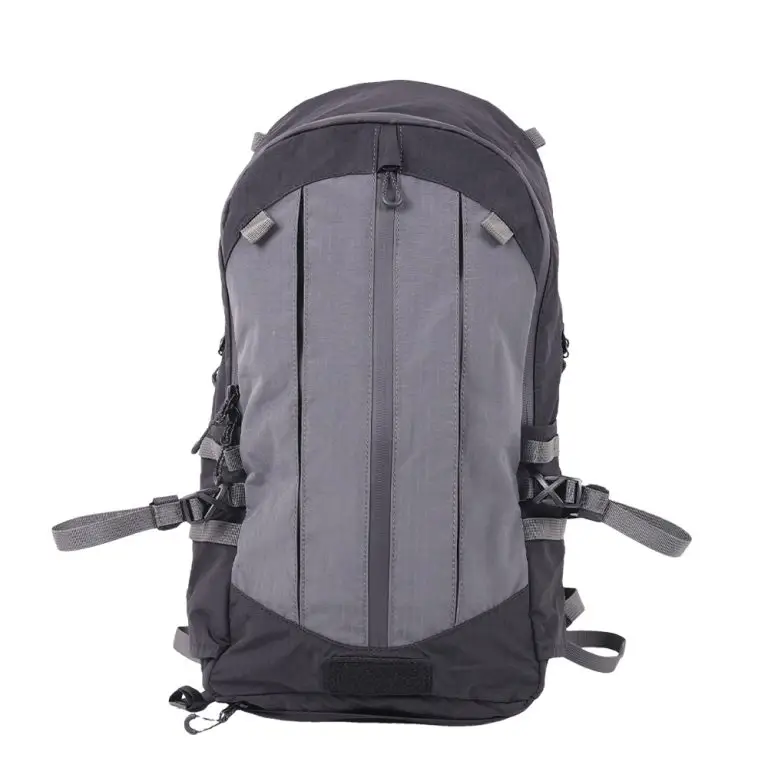
ChangRong’s Functional Modular Backpack for Men follows this practical design direction. The product uses a transformable structure intended to support flexible storage combinations, while its positioning covers daily commuting, outdoor activities, and travel. The men-centric design combines functional carrying with a more everyday appearance, allowing the product to move beyond a dedicated travel accessory.
Modular Travel Backpacks Can Support OEM and ODM Strategies
For business buyers, product flexibility also extends to manufacturing. Modular construction can provide opportunities to customize compartment arrangements, materials, colors, branding elements, and other specifications according to market requirements. This can be particularly useful for brands targeting different travel segments without creating entirely unrelated product platforms.
ChangRong provides OEM, ODM, and private-label backpack manufacturing services, according to its company information. Its production capabilities include multiple sewing lines, quality-control processes, and manufacturing facilities intended to support customized backpack projects. For buyers developing a modular travel backpack, these capabilities can help connect functional product concepts with scalable production.
Making the One-Bag Travel Decision
The modular travel backpack vs. wheeled luggage debate does not have a single winner. Wheeled luggage remains highly practical for heavy loads and smooth travel environments, while a modular travel backpack can provide greater flexibility when users move between commuting, travel, and outdoor settings.
For business product buyers, the strongest opportunity lies in understanding the intended user rather than simply choosing a luggage category. ChangRong‘s transformable, durable, and practical backpack approach demonstrates how modular construction can support different carrying needs within one product. When expandable storage and flexible compartments are combined with durable construction, a modular travel backpack can become a compelling one-bag solution for customers who want mobility without sacrificing organization.
