
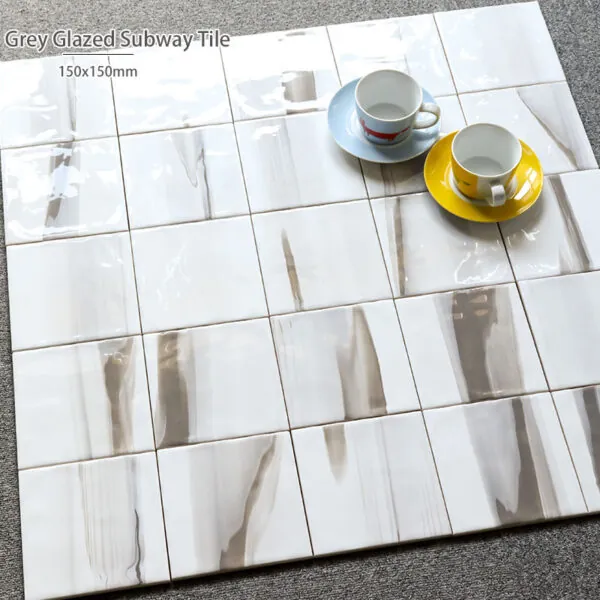
When subway tiles first lined early transit stations, their appeal was primarily functional. They provided a glazed, easy-to-clean surface that reflected underground electric light effectively. What modernist architects recognized was something deeper: the geometric discipline of a rectangular module repeated across a plane.
These designers stripped away ornament in favor of material honesty and proportional order. Today, modern subway tile specification continues this lineage through unconventional proportions, layout geometries, and material dialogues with concrete, timber, and metal. Contemporary designers deploy the format as a calibrated spatial instrument rather than a default option. Selecting appropriate tile options requires balancing surface finish with architectural scale.
The Modernist Legacy of Subway Tile

The enduring relevance of subway tile lies in its modular geometry rather than historical associations. A rectangular unit, repeated with consistent joint spacing, creates a visual rhythm reading as architectural structure rather than decoration. Modernist practice valued this quality because it aligned with spatial order. Unlike patterned tiles, the subway format functions as a neutral grid organizing space through disciplined repetition.
JLA Ceramics approaches tile manufacturing with an understanding of this geometric tradition. Their production process prioritizes dimensional accuracy and joint consistency across every batch. This commitment ensures that the modular integrity essential to modernist spatial logic remains intact across expansive installation fields, helping specification teams achieve clean architectural lines in contemporary projects.
Format Proportions and Spatial Rhythm
Proportion is the primary variable through which designers differentiate modern installations from retro revivals. Elongated formats, such as 75 × 300 mm profiles, extend visual width and align with horizontal open-plan architecture. Compact squares introduce a pixelated density suited to intimate niches. The choice of proportion alters spatial perception: longer units accelerate horizontal movement, while squarer units establish a static field.
JLA Ceramics manufactures subway tiles across a broad spectrum of proportions, ranging from compact square formats to elongated rectangular profiles. This extensive dimensional library allows specification teams to align tile scale directly with architectural proportions. Sourcing through a versatile manufacturer prevents designers from defaulting to standard, one-size-fits-all solutions across diverse building contexts.
Layout Patterns as Spatial Devices
An installation pattern transforms the same module into distinct spatial statements. Traditional running bond creates visual flow through staggered joints, but contemporary practice frequently favors stacked arrangements. Vertical stacks emphasize ceiling height, while horizontal stacks underscore surface width. Herringbone introduces dynamic diagonal movement across static wall planes. Grid installations generate a digital-era regularity that suits minimalist interiors.
JLA Ceramics produces subway tiles in multiple formats, from compact squares to elongated rectangular profiles. This dimensional range allows installers to select proportions suited to grid, stacked, or herringbone layouts according to project requirements.
Material Honesty and Surface Authenticity
Modern design values material honesty—a quality where a surface reveals its own substance instead of imitating another. In modern subway tile applications, this translates to matte finishes communicating the clay body, or gloss glazes displaying coating depth. Specifiers avoid artificial imitations of stone or wood. Instead, they choose unambiguous ceramic surfaces that offer visual frankness, aligning with contemporary preferences.
Quality verification processes at JLA Ceramics focus on surface integrity and finish consistency across all production lines. This systematic testing ensures that specified finishes—whether matte, gloss, or subtly textured—perform reliably over time. Maintaining glaze stability preserves the authentic material characteristics that architects and interior designers expect from premium ceramic surfacing.
Dialogues Between Tile and Contemporary Materials
Contemporary interiors rarely isolate a single material. Tile must converse with concrete, steel, glass, and timber within a shared visual field. The repeated module of subway tile provides a rhythmic counterpoint to monolithic polished concrete or stone slabs. Joint lines create a graphic texture that mediates between smooth and rough materials, achieving balance through contrast against cool architectural metal.
JLA Ceramics provides fter-sales technical support that includes installation guidance. The team can address questions related to tile layout planning and coordination with adjacent materials such as concrete, timber, or metal finishes. This support helps designers and contractors manage practical installation considerations when combining tile with other surface materials in a single space.
Commercial Applications and Brand Materiality
In retail, hospitality, and workplace environments, subway tile functions as a strategic material choice rather than a nostalgic signifier. A precisely proportioned installation in a boutique signals considered materiality. Modern applications favor restrained proportions, uniform installation, and subtle material dialogues with surrounding finishes. The tile acts as a textured background supporting brand identity, allowing furnishings and lighting to occupy the foreground.
To support commercial developments, JLA Ceramics delivers scalable manufacturing capacity alongside custom OEM capabilities. The company maintains strict batch quality and offers custom specification options. This reliability makes them a dependable partner for commercial brands seeking to establish consistent, proprietary interior material palettes across multiple store locations or hospitality properties.
Specifying Modern Subway Tile for Contemporary Interiors
Effective specification of modern subway tile requires evaluating proportion relative to room dimensions and selecting layout patterns that reinforce spatial movement. Mock-ups remain essential, as tile scale and glaze reflection can read differently under site-specific artificial lighting. Evaluating how joint shadows register across a wall field prevents disappointing results and ensures the selected format performs effectively within context.
JLA Ceramics is a professional tile manufacturer based in Foshan, China, offering an extensive subway tile collection alongside custom design and OEM capabilities. With extensive production experience and rigorous quality assurance, JLA Ceramics supplies modern subway tile products supporting contemporary design schemes. To explore modern subway tile proportions and layout options, visit JLA Ceramics.
