
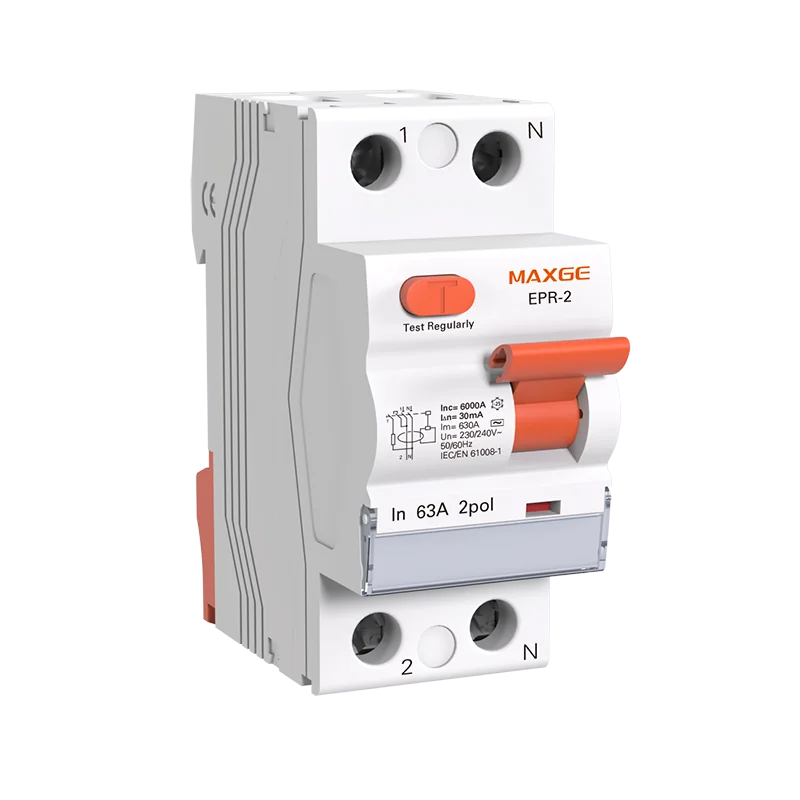
Electrical safety depends on more than preventing short circuits and overloads. Leakage current can create a serious shock hazard, particularly when electrical equipment is installed in environments where people may come into contact with conductive surfaces or damaged insulation. This is why residual current protection has become an important consideration when selecting electrical control products.
A residual current circuit breaker can detect abnormal current leakage and disconnect the circuit when the detected residual current reaches its specified operating threshold. Understanding the RCCB function, correct installation requirements, and appropriate device selection can help create a more reliable electrical protection system.

Understanding the RCCB Function in Electrical Protection
The primary RCCB function is to monitor the balance of current flowing through the live and neutral conductors. Under normal conditions, the current entering a circuit should return through the corresponding conductor. If part of the current escapes through an unintended path, such as a damaged insulation layer or a person in contact with an energized component, an imbalance occurs.
The device detects this difference and initiates a trip when the residual current reaches the specified sensitivity level. This basic principle explains the function of RCCB and its role in reducing the duration of exposure to leakage current.
Unlike conventional overcurrent protection, an RCCB is primarily designed to respond to residual current rather than excessive load current. Therefore, it should be selected and installed as part of a coordinated protection system rather than treated as a replacement for circuit breakers that provide overload and short-circuit protection.
How Does the Operation of a Residual Current Device Work?
The operation of residual current device technology relies on continuous current monitoring. Conductors passing through the device’s sensing mechanism generate a magnetic effect related to the current flowing through them. When the currents are balanced, the resulting magnetic flux remains within the normal operating condition.
When leakage occurs, the current balance changes. The sensing mechanism detects the difference and sends a signal to the tripping mechanism. If the residual current exceeds the device’s rated operating sensitivity, the circuit is disconnected.
This process is designed to limit the time during which dangerous leakage conditions remain present. However, the actual protective performance depends on factors such as rated residual operating current, response characteristics, wiring configuration, grounding arrangements, and the overall electrical installation.
For this reason, simply installing an RCCB is not enough. The device must match the electrical characteristics and protection requirements of the application.
Choosing the Right Residual Current Circuit Breaker
Selecting a residual current circuit breaker requires more than checking its rated current. Users should first consider the type of electrical system, number of poles, operating voltage, residual current sensitivity, and the characteristics of connected loads.
Sensitivity is particularly important because different applications can have different protection requirements. A device intended to provide additional protection against electric shock may require a different residual operating current from one primarily used for equipment protection or leakage monitoring.
It is also important to consider whether the electrical loads can generate different types of residual currents. Modern equipment containing electronic components, switching power supplies, variable-speed drives, or other power electronics may require a suitable RCCB type to ensure reliable detection.
Users should also review installation conditions, ambient temperature, mechanical requirements, and coordination with upstream and downstream protective devices. Proper selection helps reduce nuisance tripping while maintaining the intended level of protection.
Where Residual Current Protection Matters Most
Residual current protection can be valuable in commercial buildings, industrial facilities, workshops, residential electrical systems, and other installations where electrical equipment and people operate in close proximity.
Areas exposed to moisture require particular attention because water can reduce electrical resistance and increase the potential consequences of insulation failure. Portable equipment, sockets, lighting circuits, and circuits supplying appliances may also benefit from appropriate residual current protection.
In larger electrical installations, protection should be considered as part of the complete distribution architecture. Coordination between circuit breakers, residual current devices, distribution equipment, and wiring can help ensure that a fault is isolated effectively without unnecessarily interrupting unaffected circuits.
Installation and Maintenance Should Not Be Overlooked
Even a correctly selected electrical control product cannot perform as intended if it is incorrectly installed. Wiring should follow the manufacturer’s requirements and applicable electrical standards. The protected conductors must pass through the appropriate sensing path, while neutral and protective conductors should be arranged correctly.
Regular testing is also important. Many residual current devices include a test function that allows users or qualified personnel to verify whether the tripping mechanism operates correctly. Testing should follow the manufacturer’s recommended procedures and applicable local requirements.
If an RCCB trips repeatedly, users should not simply reset it without investigating the cause. Frequent tripping may indicate insulation deterioration, moisture, equipment leakage, wiring problems, or an unsuitable protection configuration. Identifying and correcting the underlying issue is essential for maintaining electrical safety.
Selecting Electrical Control Products for Reliable Protection
A complete electrical protection strategy requires products that correspond with the application, installation environment, and expected fault conditions. Residual current protection is one part of this strategy, working alongside circuit breakers and other electrical control products to manage different electrical risks.
When evaluating products, users should review technical specifications, applicable standards, rated values, product construction, installation requirements, and after-sales technical support. Clear documentation is especially important for projects involving multiple circuits or different types of electrical loads.
MAXGE provides a range of electrical control products designed for different electrical distribution and protection applications. Understanding the technical requirements before selecting a product can help users establish a more appropriate protection configuration.
Making Electrical Safety a Practical Design Priority
Residual current protection addresses a specific electrical hazard that conventional overcurrent protection may not detect in the same way: unintended current leakage to earth. Understanding the RCCB function and how residual current device technology operates can help engineers and installers evaluate protection requirements when designing, upgrading, or maintaining electrical systems.
The appropriate device should be selected according to the application, electrical parameters, installation conditions, and relevant standards. MAXGE develops low-voltage protection and control solutions for different electrical environments, including terminal protection, power distribution, and applications related to PV, energy storage, and EV charging. Its product development is supported by an R&D team, patented technologies, and testing capabilities including CNAS-related laboratory resources and international certifications.
For RCCB specifications, technical information, or application-related questions, you can contact MAXGE through its official website to discuss suitable protection options for your electrical system.
